ROLLERBALL: “The Trail of Butter Yeti” *****

Recorded 2000-2001.


Rollerball is a rock avant-garde band from Portland, Oregon. After a derivative and somewhat epigonic beginnings immortalized on “Garlic”, the formation regrouped under drummer Gilles and developed a rich palette of approaches singularly aware of the predecessors’ bequest. The line-up stabilized with Mae Starr on keyboards, Mimi Wagonwheel on bass, Bunny De Leon on reeds and later Amanda Mason Wiles on saxophones. The band willingly experimented with heavy editing and multitracking, but almost always within the context of rock aesthetics and well-defined rhythmic structures.


The band does not indulge in extended compositions, which may have limited their appeal among avant-prog fans. The writing is intense and saturated, but maintains a sense of balance and contrast. Their importance is yet to be recognized.


Pest

Pounding cadence by Gilles opens the record in a resolute fashion. The steady measure will swell until a plaintive, screeching saxophone heightens our expectations.


Yeti

Looped guitar adds to a shuffling, almost reverting rhythm on this (semi-) title track. It is almost instantly doubled up by a disoriented, vaguely Beefheartian guitar, which reluctantly scrambles around. Concussive cymbals cackle and jamble. Well place, smeared fade-out will only be interrupted by a warmhearted goodbye from the electric guitar.


Lon Chaney

This is a more assiduously constructed composition. In the first movement, harpsichord-like keyboard opens and soon meets a full bodied reed section. The combo accelerates but winds down prematurely. In the second movement, Rollerball sits down to a complex avant-prog etude, with piano and rhythm section accompanying an anthemic female vocal. The mix quality brings to mind early U-Totem’s Emily Hay or Deborah Perry of mid-era Thinking Plague. When the saxes return, the electric guitar is too anemic to soldier on and the promising progression lapses. In the third movement, after a solo bass overture, the wind section altercates with the right handed piano. The focus shifts over to a guitar that tiptoes aimlessly, until it is rescued from immobility by the saxes, the drums and the piano.


Butter Fairy

Dull, idiophonic opening evokes jangling Javanese bonnang. A string instrument responds to the call, dragging behind suspect murmuring. Enter the drums. The string instrument turns out to be nothing more than an electric guitar, even though it continues to strum around with a zither-like timbre. It’s here that Mimi Wagonwheel’s contrabass infrasounds will bolster the drum beat, resurrecting the ghosts of Jaki Liebezeit’s most memorable moments. Sibilant voicings come and go. Clarinet revisits this section, but does not disrupt the increasingly hypnotic flow. The deadpan guitar works out effortlessly on a robotic treadmill. After a short pause, the neurotic rhythm returns, allegro moderato, with the clarinet somehow lingering on. The continuous banging is imperceptibly morphing into a dry, leathery resonance. When the intensity of the beat subsides, we finally notice the indefatigable guitar’s harmonic support that must have been laboring in the background all along. If this track defines the second half of the record’s title, then it does so deservedly.


Truth

Holger Czukay’s fans will be excused for their distraction. The backward taped voices employed by Rollerball on this interlude are redolent of Canaxis’s first minutes. Nothing else – lighthearted wooden percussion, windy background effects and sinuous electronics – will matter much here.


Narcisse

We enter a coffee shop noisescape, confounded by children’s voices, and bits of female conversation. When this sketch fades, a song is intoned a cappella. It is closely followed by a melody built from a vicarious quartet of piano-bass-drums’n’tapes. The tune continues to filter in and out between a cappella element and the processed, percussive dash of subtle, instrumental editing. The parenthesis is closed with a honky tonk prattle in the distance.


White Death

Bells and percussion introduce a heavily processed female alto that loses little time to gain in dynamic. Mae Starr’s electric violin searches out the same pitch in a wavy manner. This duel makes for a disorienting experiment. Densely scribbled percussive daubings destabilize what could otherwise be a fashion show for vocal chords.


Earth 2 Wood

Bold and straightforward, as only a song can be. Amanda Wiles and Bunny DeLeon initiate this piece on tenor saxophone and trumpet, further bolstered by the piano and rhythm section. The chorus is multitracked and occasionally visited by an unlikely accordion.


Can’t Run the Dogs That Hard

A man reads a poem to the accompaniment of lyrical guitar and piano. The saxophone passage emphasizes the loneliness of these introverted ruminations. This is Rollerball at its most melodic and introspective. But seemingly refracted thuds will keep it from becoming lacrimal.


Line of Perpetual Snow

Wind chimes and accordion move with the urgency of a giant’s breath. The atmospheric circularity will be sustained by a sleepwalking female vocal. After 2 minutes, a more macroscopic image is articulated via multilayered reeds and accordion. And when Amy Denio-like yodelling bursts in, we may just as well join in for a swirl of faux waltz.


Smokey Loved Bacon

Cadaveric dogs bark through the fog of sputtering late evening smoke. Is it Smokey? The sound source is too amorphous to tell, but we surmise that it is animate. This raises our level of apprehension. The release comes when high pitched chords finally take over and drift off in a coda.


***


If you have a chance, search out Rollerball’s output, especially the recordings from their creative peak 1999-2001.


ROLLERBALL: Garlic (1997)

ROLLERBALL: Einäugige Kirche (1999)

ROLLERBALL: Bathing Music (2000)

ROLLERBALL: Porky Puppet (1998-2001)

ROLLERBALL: Long Walk for Ice Cream (2000-2001)

ROLLERBALL: Trail of the Butter Yet (2000-2001)


The band has continued to record, apparently in a more decisively ‘jazz-rock’ vein. I have not heard these recordings, which does not mean that they should be avoided.

 

Published in: on May 20, 2008 at 10:33 pm  Comments (1)  
Tags: ,

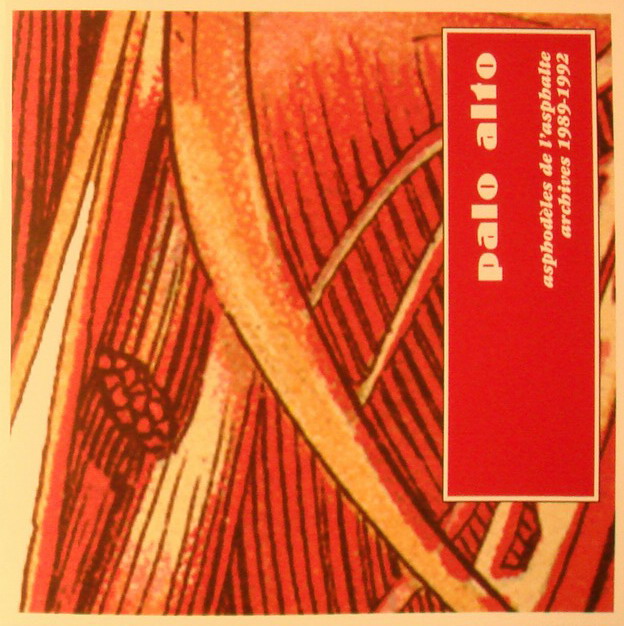
PALO ALTO: “Asphodèles de l’asphalte” ****

Recorded between 1989 and 1992


Palo Alto was a French quartet active in the 1990s. Denis Frajerman, Jacques Barbéri, Philippe Perreaudin and Philippe Masson successfully reconciled two distinct musical traditions – quintessentially Gallic miniatures and a very un-French approach to studio processing. The results were stupefying. The pictorial depth of their recordings could only be matched by Denis Frajerman’s solo adventures. Their rich, phantasmagorical paysages were populated by odd shapes and eerie shadows. This was rock electronics of volcanic creativity.


The band disappeared from sight around 2000. More recently, a number of archival recordings saw the light of the French day (with, regrettably, little light anywhere else). The collection presented here was among them.


After several cameo appearances on various tribute records (Ptose, Coil), the band resurfaced live and finally published a new CD in late 2007. They seem to be active again, publishing music, video and books.


Le chant posthume

Self-declared overdrive bass opens the record as if evoking the zeuhl heritage. Il n’en est rien. This piece and the entire record will be strongly rooted in the then inescapable tradition of post-new wave stylisms and Residents-like nightmares. Following a sequence of faux tubular bells, a quasi hysterical female vocalism sidetracks our attention. But instead, a slow progression on keyboards remains stuck in pentatonic scale. The “song” closes with unsettling ingressive vocal sounds.


Asphodèle de l’asphalte

Mechanical mambo jolts from the rhythm box, accompanied by a very juicy electric bass which will define the record’s title piece. This simple repetitive melody will see no development, despite, or may be because of a somewhat anemic Middle Eastern phrasing.


Madame la charcutière

This is little more than an epigrammatic piano vignette. Two female voices, courtesy Claire and Nathalie, turn the nascent melody into a non-sequitur.


Séquence 4

Manipulated, growling voices open this sequence. Deeper, subharmonic layers provide a canvas for sharp snippets of alto sax loops. Independently, percussive pattering envelopes a sketchy keyboard melody and grows in intensity, but will not obscure the melodic line.


Les flots sont moins bleus que les sables

After an all-too-short intro on maghrebian recorder, over-familiar electronic pulse zooms in. Luckily, hyperactive balalaika soon floods us with rapid figures, contending for space with vaguely Middle Eastern harmonics. It is then substituted by a pre-dawn clarinet. One searches for references to Joseph Racaille, but in vain.


Cosette

Formulaic tune played by Denis Frajerman on multi tracked keyboards in a shrugging Klimperei style.


Monsters are Bach

We revisit the Residents recipe – marching aliens, distorted voices at triple speed and mechanic reversals of muscular electro-feedback. Squeezed into this stomping, the keyboard theme is actually less straightforward than in the previous pieces.


Anomala

Innocuous rhythm box hails from deep in the 1980s – an unabashedly new wavy reminiscence. Were it not for the spastic balalaika in the background, the tune could almost be adorned with affected vocals à la the Cure.


Paysage: nul chant d’oiseau

Simplistic electronic meter chops about for another meal of pentatonic figures. But then we are reached by austere effects of untuned strings. The resonating twang evokes African kora, but we should not be misled, as the sound apparently emerges from a cheap keyboard that Philippe found at a flea market. The mixed-down balalaika returns, bridging those dull pizzicato explorations with the mutant rhythm.


Musique de l’enfer 1

The ghastliness of this miniature will barely attain the standard of the B-movie. The somewhat ramshackle beat will brake before we have even noticed.


Musique de l’enfer 2

This is a more exploratory dance macabre, adorned with echoing alto sax. The morbid, electronic pulse recalls, this time again, the Residents.


Avant la naissance

This number is based on a procedure well known since 1960s – a tape recording, here with a text in French, cut short and sent through a loop. After several seconds, the repetition graces us with an irregular rhythm until new loops of other conversations and radio announcements are overlaid on top. Fortunately, the collage never becomes too dense. After nearly 3 minutes this sonic sauce is supplemented by a heavily processed source of electronic origin, but it will not materially alter the original theme. Henceforth, the track develops along two surfaces. Jacques Barbéri’s strident alto saxophone cuts through this mass until the electro-throb returns and drowns out all the other contributions.


Friture

The next two compositions present Palo Alto as a quintet and are more consciously developed. Here melodramatic recitation by Marie-Laurence Amouroux extrudes phonemic values from the interplay of pre-programmed rhythm-box and a warm bass clarinet. The alto saxophone, as often on this collection, soars independently. Philippe Masson multiplies the grating mechanical beats.


Le pont

Another anti-chanson. This one approaches the style developed several years before by Alesia Cosmos. The stripped down female voice seems to be slowing down the hesitant theme. The reeds contribute sparsely to the overall cartoonish image.


La quatuor vocale

The last recording is something of a throwaway – an experiment of a multi-tracked vocal contributed by Philippe Perreaudin.


***


All those who wish to uncover Palo Alto’s other jewels, here are some recommendations:


PALO ALTO: Le close (1990)

PALO ALTO: Grand succédanés (1992)

PALO ALTO: Asphodèle de l’asphalte (1989-1992)

PALO ALTO: Excroissance (1993) MC

PALO ALTO: Trash et artères (1993-1994)

PALO ALTO: Le disque dur (1996)

PALO ALTO: Trans Plan (1998 )

PALO ALTO / KLIMPEREI: Mondocane (1995-2000)

PALO ALTO: Terminal sidéral (2005-2007)

VARIOUS ARTISTS: Pogs Box (2001), remixes

Denis FRAJERMAN: Mandibules (1990, 1994) MC

Denis FRAJERMAN – PALO ALTO Solo: Le souffle du vide (1992-1995)

Denis FRAJERMAN: Drosophiles (1995) MC

Denis FRAJERMAN – Jacques BARBERI – PALO ALTO: Le nom des arbres (1996)

Denis FRAJERMAN: Les suites Volodine (1997)

Denis FRAJERMAN: Fasmes vol.1 (1997)

Denis FRAJERMAN: Macau Peplum (1996-1999)


A.D.D. Trio: “Instinct” ******

Recorded February 1995.


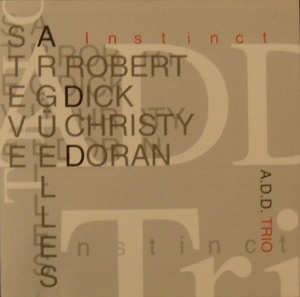
A.D.D. Trio was active in Switzerland in the 1990s. Drawing on the talents of Christy Doran on guitar, Robert Dick on flutes and the young Steve Argüelles on drums and percussion, the trio naturally abode by the traditions of continental Euro-jazz. The band’s two recordings, “Instinct” from 1995 and “Sic Bisquitus Disintegrat” from 1998 are exemplary marriages of jazz form and rock sensitivity. The compositions are highly illustrative, yet complex and mostly improvisation-based. The trio filled a niche, seldom exploited by jazz or rock artists – a guitar in a multiple melodic and rhythmic role, and intelligent drumming structures providing ample, four-dimensional space for a variety of flutes. The playing is tight and the experienced musicians never yield to the temptation to show off.


Rock fans will be disappointed by unfulfilled promise of repetitive patterns. Jazz buffs may have a problem with the structure of most compositions. But fans of sonic asymmetry will return to these recordings with unwavering fascination.


Instinct

We are welcomed by the unlikely wheeze from the flutist. The instrument punctuates a guitar figure that is too unobtrusive to be obsessive. Suddenly, bass-drum duo accelerates and introduces the piccolo flute in its graceful twists and turns. Initially, the high octave instrument invites the reluctant guitar to respond. But then it settles to whistle airily above the increasingly tight structure provided by the sensual drumming.

At times, it enters nearly registers redolent of shakuhachi.


After nearly four minutes, the rhythmic guitar reinvents the piece. It will create a tension over which bass flute will glide effortlessly. Its more commonly used cousin will finally intone a melody, only to crash against deep thuds from the drums. A loud progression from fuzz guitar will make overtures, but they are doomed and will bring no conclusion. An interlude evoking an earlier flute melody and a mellower guitar rhythm will lyrically lead towards a more optimistic closure. It is a clear, almost classic tone that bids farewell to this jewel.


ReDug Me Not

At the outset, didjeridoo-like puffs from the contrabass flute collide with scraps from fuzz guitar. The strumming work fails to become more consistent and the titans choke in the duel until an unusual rock duo begins to test a rapid progression, then a lilting strut, then an offbeat workshop chop. The drum kit tightly keeps it all in place. Under the surface, the puffing woodwind strides until a looped guitar form takes the center stage, supported by a deep drone and punctuated by overlaid impressionistic guitar solo. The story evolves rapidly into a crescendo and stops at high speed.


Steam

The galloping rhythm is supported by both the drums and repetitive guitar. Bass flute echoes in misty landscapes, improvising freely. Half way through the piece, the guitar aspires to its own voice, only to fold back sheepishly into the rhythmic role. The flute’s poignant tone makes it for a wistful experience despite the gallop. Excellent introduction to the drummer’s compositional talents.


Cerulean Blues

The high register of the oriental opening ushers us into a space populated with richly percussive textures. But the shamanic slapping does not last and the mysteriously Asian intro prevails until a more constructive guitar counterpoint shifts the direction. The flute returns, like starkly ink-colored brushwork. Blues, maybe, but with slanted eyes.


Twists and Turns

Back from the Orient, we return to a more familiar, Chicagoan territory. Christy Doran’s mid-tempo figure is easily recognizable from his OM days. One wonder if this is a cross-textual quotation. The unusual undertone of the contrabass flute provides a holding pattern for a succession of shuffling figures in which the guitar calls on both partners. After a moment of silence, the musicians fall into a collective exercise in doubt. Each ventures into the center stage, only to retreat with scraps of atonality. More color from warped percussion. Finally, a gentle breeze from the guitar oozes into the distance.


Way Up There

Like the first lark in Spring, the flute turns the annunciation of a new piece into a promise of a more jagged improvisation. This more decisively polyrythmic exposé stammers between warm guitar soli. It then picks up the pieces to hand over the direction to the drummer. Arguelles displays a disciplined palette until overlaid by the intrusive flute. But no melodic line will evolve from the fractured form. The most we can get is an occasional solstice from the entire trio.


Magmas

This time the delicate brushing of the kit and vesperian guitar offer a slow-shifting background for the bass flute. With considerable agility, Robert Dick is running up and down the entire register of this instrument. The extreme frequencies are further expanded in the background – deafening bass drones through dull chimes. Occasionally, impressionistic guitar glissando provides a harmonic backbone. We are almost in the ECM territory.


All the Time, Anyway

The combo approaches from all sides, but we do not instantly know where the meeting point will be. Imperceptibly, the lattice is becoming denser. But the three artists fail to meet. Instead, they circulate at some distance from each other. The guitar accents are less ubiquitous, but paradoxically more divisive than the pervasive flute lines. The slow tempo allows the drummer to experiment with various responses to the dialogue that eventually unfolds between Doran and Dick. As their dialogue turns into an argument, the tempo rises but so does the rhythmic complexity. As often on this record, the tension fails to climax. Instead, the drummer clatters apart and the flute invokes the oriental mood of Cerulean Blues. But then a different band emerges, dependent on the thundering guitar rumbling, multilayered and not shying away from the confrontation. The 10-minute long opus ends with a flute coda, bathing in an electronic soup.


Next

Syncopated rock breaks through in a Shrek mold. It yields to a structured flute melody, this time played without restraint. This is the ADD Trio at its most compact yet, linear and uptempo. It is articulate and unadorned, but somehow majestic.


****


For all those who have a chance to enjoy A.D.D. Trio, here are some other recommendations:


OM: Montreux Live & More (1974)

OM: Kirikuki (1975)

OM: Rautionaha (1976)

OM: With Dom Um Romao (1977)

OM: Cerberus (1980)

DORAN-STUDER-WITTWER: Red Twist and Tuned Arrow (1986)

DORAN-STUDER-BURRI-MAGNEGAT: Musik für zwei Kontrabasse… (1990)

Fredy STUDER – Christy DORAN: Half a Lifetime (1977-1994)

ADD TRIO: Instinct (1996)

ADD TRIO: Sic Bisquitus Disintegrat (1998)


Please note that the Swiss OM has nothing to do with the currently active US band under the same name, led by Al Cisneros. Nor should it be confused with the Spanish experimental jazz-rock band from early 1970s.

Published in: on May 18, 2008 at 7:23 pm  Comments (4)  
Tags: , , , ,