SEVENTH SEAL: “Seventh Seal” *****

Recorded 1997


Seventh Seal were one of Asahito Nanjo’s projects in the 1990s.  Rather than a separate band, Seventh Seal were a mutation of his ongoing project known as Ohkami no jikan (‘time for wolves’, or ‘wolf era’).  This constellation’s variable line-up strayed on the more mystical side of Tokyo’s ‘psychedelic’ scene, an approach which would flourish when in the mid-1990s Makoto Kawabata joined the sessions.  Around that time the two musicians also appeared in (perennially disappointing) organized noise-rock supergroup Musica Transonic. 


Having grown up on the Fugs, Godz and European soundtracks, Asahito Nanjo first plunged into the anti-virtuosic punk scene in the late 1970s.  After a stint at Kosoukuya, he co-founded the hyper-fast Psychedelic Speed Freaks, which later gained fame as High Rise.  The heraldic band constituted an important chapter in the multi-linear history of spontaneous speed-noise, and is correlated with the rise of Ikeezumi’s PSF label in Mejiro.  Nanjo continued the format later in Mainliner.


But it is his interest in the more spiritual, mantric side of rocking hysteresis that must have led to Seventh Seal’s sessions.  Nanjo’s experience with Keiji Haino in Nijiumu could have been one of the contributing factors.  Using very basic, circular guitar and organ structures, Seventh Seal successfully generated hallucinatory impressions of timelessness and spacelessness.  Transposing the rhythm structures from sufi music onto aural afterimages created ruminative, yet enrapturing rituals.  Nanjo and Kawabata continued the adventure in a more acoustic and admittedly ‘shamanistic’ vein as Toho Sara.


Meanwhile, Ohkami no jikan continued to perform, progressively moving towards heavier, darker realms, reminiscent of mid-period Fushitsusha.


Spiritual Spring’s Slavering with Circling

Anatolian guitar greets us with an update on John Weinzierl’s early Amon Düül II twang, whirling majestically upon a ritualistic Mevlevi dance.  Earthy cymbals pinpoint the full closure of each circle, leaving the full pivot to thundering mallets.  Mineko Itakura vocalizes from deep inside the well of truth.  Her voice resounds ethereally, seeking that perfect Djong Yun moment, but never attempting to emulate that pristine coloratura.  Rather, Mineko’s voice soars like an eagle swooning around with a lot of time on its claws.  In a classic redshift, longer wavelengths ooze when her voice recedes – an auditory version of motion parallax…  Kawabata’s weaving is fluent and appropriate, but never flashy.  Itakura’s bass trots loyally when Nanjo commences his chant from deep inside the tunnel, with a 3-3-3-3 syllable structure – rather non-standard for a Japanese waka.  The effect is mesmerizing nonetheless – as any circulating, hypnotic, homomorphic repetition would be.

Then all of a sudden, the band abandons the mantra and takes off on the back of a stilted, angular bass form almost directly lifted from Amon Düül II’s clumsy time signature transition.  It is as charming as a child’s error in holophrastic stage, but you would politely suppress a chuckle if an adult committed it.  Soon, Kawabata plunges into his pyrotechnic West Coast style, still miles away from his later Acid Mothers Temple exhibitionism.  He guides us through the entire panoply of phrasing modules, allowing bass and drums to pick up speed until the freaking out band crashes against the wall of cymbals.

Undaunted, the caravan sets out again.  In a reprise of the initial intro, the vocalize returns.  Hajime Koizumi’s stately drumming conjures up images of the dervishes’ vertigo-less worship.  Guitar and vocal now circle like two predators in search of a prey.  Against the steady, periodic tempo, Kawabata sizzles and frizzles, splashing dirty overdrive on the way, but always remains melodic and measured.  Finally, slowly, very slowly the band cools off.


VAVA

A fast, uplifting track, where fuzz-less guitar (again that John Weinzierl or Conny Veit timbre) sews at ultra-speed a theme that could become a dance from some mountainous corner of the old continent sheltering a forgotten ethnic minority.  It is impossible to tell if Kawabata had pre-cognitive visions of his Occitan experiences, or whether the beat owes more to the classic Munich band’s own borrowings.  In any case, Koizumi and Itakura’s rhythm section barely catches up.  Another transition appears to be, yet again, a dig to those charmingly clumsy, fractured bridges with which Amon Düül II shifted keys and tempos. 


The Fifth Substance and Four Elements

Despite the apparent subdivision of this track into four elements (Air, Fire, Earth, Water), there is not much of Third Ear Band relevance here and those who seek a neoclassical (or orientalist) parallel, are better served by resorting to the first two Toho Sara records.  “The Fifth Substance” sounds like a mere excerpt from a longer timbral exploration, opening with a meowing, somnambulant, bowed viola and beaded cymbal work.  Deep echo and agonizing murmur send a salute to the venerable Taj Mahal Travellers school.  Discrete, yet tonally effective organ envelops this intricate, ornamental embroidery of a highly resonant, pensive percussion, courtesy Nobuko Emi.  Somewhere between the immanent shimmer of sarangi, viola and organ, gurgles underlie tensile squeals and groans crater under soggy splatter.  Finally, unexpected plosive effects drag the band from this mind-blinding atmosphere, halfway between vintage Pink Floyd and early Sonde.  But for several minutes at least, the quintet has successfully suspended temporality. 


***


SEVENTH SEAL: “Live 1995” (1995)

SEVENTH SEAL: “Seventh Seal” (1997)


The material on the earlier recording partly overlaps with the LP described above.  Several cassettes have also been issued but I have not heard them. 


Many of Nanjo’s bands explored other musical pastures and do not have to be mentioned in the context Seventh Seal.  The positions listed below bear at least some relevance to the sound of Seventh Seal, if not in orchestration and attitude, then certainly in an attempt to generate a mood of spiritual blissout.  Splendor Mystic Solis was a simplified version of Seventh Seal and occasionally included Kawabata.  The most Seventh Seal-like recordings of Ohkami no jikan were made in the early 1990s, as showcased on the compilation “Tokyo Flashback 2”, but could also be expected on some of the earlier cassettes, which I have not heard.  Toho Sara’s third CD was a disappointment.


TOHO SARA: “Toho Sara” (1995)

TOHO SARA: “Meijou tansho, part 1-5” (1998)

SPLENDOR MYSTIC SOLIS: “Mystic 1 & 2” (1999)

SPLENDOR MYSTIC SOLIS: “Heavy Acid Blowout Tensions Live” (1999)

OHKAMI NO JIKAN: “Mort nuit” (2001)

TOHO SARA: “Horouurin” (2004)

NANJO, ASAHITO GROUP MUSICA: Contemporary Kagura-Metaphysics (2006)

Published in: on July 30, 2008 at 7:11 pm  Leave a Comment  
Tags: , , ,

Special feature: HENRY COW’s bootlegs

On a very irregular basis, Sonic Asymmetry will devote a posting to a review of an entire series of recordings of historical significance.  This time, a chunk of cyberspace goes to Henry Cow’s elusive, unofficial documents.


Looking back in history, one can identify several tipping points that durably changed the nature of musical creation.  Those who operated at these inflection points not only enriched musical imagery and hugely expanded future artists’ perceptual map.  They also influenced the audiences’ musical memory and, as a consequence, created an entirely new set of auditory expectations.  Pierre Schaeffer’s 1948 lectures played such a role in concrète and electronic music, privileging radical changes in aural perception.  Ornette Coleman’s collective improvisation, immortalized in December 1960 had the most potent impact on human capacity to capture the power of spontaneous intersubjectivity.  In the process, Coleman pushed the jazz world into cognitive dissonance for at least five years.


In the broadly-defined rock format, such a tipping point was reached when several British musicians coalesced their revolutionary visions into the extraordinary story of Henry Cow.


By the time the band surfaced with official recordings, the musical axial age (1968-72) was already over.  But the uniquely creative atmosphere that prevailed during those years undoubtedly planted the seeds that eventually generated some of the most consistently refreshing archives of musical creativity – both composed and improvised.  Zürich’s Rec Rec Katalog stated in the mid-1980s: “Mit einer unglaublich radikalen Konsequenz zeigten sie uns, wie die künstlich gestzten Grenzen in der Musik durchbrochen warden können – und sie gingen mit diesem Bewusstsein bis zum Extrem.  Ihre Musik ist auch heute noch hörenswert und bestitzt für die Entwicklung der progresiven englischen Musikszene exemplarsichen Wert“.  Over twenty years later, nothing has happened to invalidate these opinions.


This year we celebrate 30 years since Henry Cow disbanded and 40 years since the group’s creation.  It is an excellent opportunity to review the less-known, unofficial recordings of the band.  In order to avoid lengthy repetitions, I first list the full names of musicians who, in various periods, appeared as more or less ‘official’ members of Henry Cow: 


·        Tim Hodgkinson – organ, alto saxophone, clarinet, piano, prepared piano, electric piano, Hawaiian guitar, percussion, vocal

·        Fred Frith – guitar, violin, viola, xylophone, piano, bass, vocal

·        Andy Spooner – harmonica

·        Rob Two – guitar

·        Joss Grahame – bass

·        Dave Atwood – drums

·        Andy Powell – bass

·        John Greaves – bass, piano, celeste, whistle, vocal

·        Martin Ditcham – drums

·        Chris Cutler – drums, percussion, radio, objects, toys, whistle, noise, trumpet, vocal

·        Geoff Leigh – tenor and soprano saxophones, flute, clarinet, recorder, vocal

·        Lindsay Cooper – bassoon, oboe, recorders, flute, soprano saxophone

·        Dagmar Krause – vocal

·        Peter Blegvad – guitar, clarinet, vocal

·        Anthony Moore – piano, tapes, electronics

·        Georgie Born – bass, cello

·        Annie-Marie Roelofs – trombone, violin


~~~


“Early Demo Tapes 1973”*****


This collection includes a number of tracks from the period immediately preceding the first LP “Leg End”.  The official album was recorded between May and June 1973, so it is probable that the titles on “Early Demo Tapes” were immortalized during the second quarter of that year.  The line-up is the same as on the first LP (Leigh/Frith/Cutler/Hodgkinson/Greaves).  The material includes three tracks from “Leg End” (“Nine Funerals for the Citizen King” appears in two different versions), as well as a nine minute long “Hold to the Zero Burn” and a short “Poglith?”, neither of which appears on official issues. 


The presence of the former track is confusing and I can barely find any similarity between this version and the only studio document of this composition – presented on Tim Hodgkinson’s CD “Each in Our Own Thoughts” (1994).  In the liner notes, Hodgkinson mentioned that it had been commonly played by Henry Cow live in 1976-77.  However, the material on “Early Demo Tapes” would mean that “Hold to the Zero Burn”, at least in its skeletal form, is much older than indicated by Hogdkinson.  If it is so, its vintage form it is much less extended (9 minutes instead of 16 minutes on “Each in Our Own Thoughts”) and lacks the lengthy intro. 


The sound quality on this bootleg is good.


“Henry Cow & Co.”******
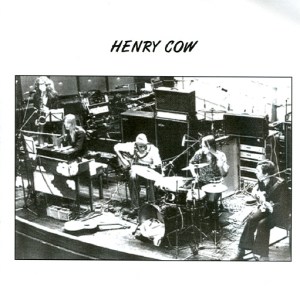


This is one of the most interesting of these collections, even though it incorporates some tracks that are not nominally “Henry Cow”.  Three of the group’s compositions were recorded in the BBC on 24 April 1973.  This set includes the excellent “Guider Tells of Silent Airborne Machine”, which has not been released anywhere else.  The session also incorporates yet another version of “Nine Funerals for the Citizen King” and “Bee”, both known from LP “Leg End”.  The line-up is Frith/Hodgkinson/Leigh/Cutler/Greaves. 


This is followed by a medley, opening with hitherto unknown “Pidgeons”.  This is an exploration in Lol Coxhill or Scratch Orchestra-style, followed by two tracks from the side A of LP “Unrest”, but sequenced in a reverse order.  On this recording Henry Cow are Frith/Hodgkinson/Cooper/Greaves/Cutler.  It was documented on 25 April 1974, i.e. a month after the “Unrest” sessions were finalized.  The recording venue also appears different.  “Unrest” was recorded at Manor Studio, whereas the April session was taped at Langham Studio 1.


There are 10 other tracks included on this bootleg and they are all tangentially related to the history of Henry Cow.  Five of them are signed by Fred Frith in an unusual trio with Anthony Moore and Dagmar Krause, recorded on 2 December 1974.  Three excellent pieces are by John Greaves and Peter Blegvad, who are accompanied here by Anthony Moore, Tom Newman and Andy Ward (13 December 1977).  This is far superior to any other Greaves-Blegvad bootlegs I heard from the era.


And finally, an expanded Slapp Happy adds two cuts from 25 June 1974.  The usual trio of Moore-Blegvad-Krause is augmented here by Frith, Cooper, Leigh as well as Robert Wyatt and Jeff Clyne.  This is an unusual opportunity to hear Lindsay Cooper and Geoff Leigh together (the only others being “War” from November 1974, which opens LP “In Praise of Learning” and two tracks on “Desperate Straights” realized around the same time).  To the best of my knowledge, this is not the material which was destined to become Slapp Happy’s “Europa” single and John Greaves does not appear here.  The two tracks are “War is Energy Enslaved” and “Little Something”.  The latter had previously surfaced on Robert Wyatt’s collection of rarities entitled “Flotsam Jetsam”


The sound quality on this collection is superb.


“Rare Tracks Compilation”*****


The unimaginatively entitled “Rare Tracks Compilation” collects several sessions, apparently from 1974, immortalized courtesy John Peel’s Top Gear.  Snippets from the same session as above (25 April 1974) are also reproduced here.  Although the line-up is not mentioned, we can assume that it is no different from the “Unrest” quintet.


The set begins with a 14-minute track of appalling sound quality with different versions of tracks from “Unrest”.  This is followed by 59 seconds hijacked form LP “Miniatures” – Dagmar Krause’s sampled voice from an Art Bears track and skittery improvisation. 


It is worth acquiring this disc for the next four sections, none of which I am able to disambiguate in full.  First we have an excellent 3 minute interplay with saxophone to the fore and a spasmodic electric piano in tortured tremolos and clusters.  The texture of this track and Geoff Leigh’s presence indicates that this is Henry Cow circa 1973, and not 1974 as stated on the cover.  What follows is a six-minute piccolo call, shadowed by some wailing, manic voices.  Many improvisations from around 1976 used this formula for an initial take-off, and there is a female voice here, but not Dagmar.  In addition, the saxophone is again very prominent, and this type of Frith’s fuzz was unheard after 1974.  This is followed by a 5-minute long abstract extemporization in a colorful, string-based style as known from LP “Greasy Truckers”.  Since that 21-minute contribution was recorded in November 1973, I stick to my conviction that the material presented here was also taped around the same period.  The next track is 6-minutes of deep, ominous piano clusters, soprano saxophone squeals, Cutler’s scraping and Dagmar Krause’s dramatic singing.  This slab of sonic menace is probably from around 1976.  It is as close to contemporary music as Henry Cow would ever get.  Years later Tetsuo Furudate and Zbigniew Karkowski would follow that path.


These four sections – which clearly justify the purchase of “Rare Tracks” – have a sound quality ranging from very good to superb.


Unnecessarily, someone decided to fill up the remaining disc space with material which is neither rare, not stylistically compatible with what we have just heard.  First we get “Viva Pa Ubu” and “Slice”, as known from LP “Recommended Records Sampler” (1978), then a number of Art Bears’ and the Work’s songs lifted from their official singles.  Finally, there are Fred Frith’s improvised guitar-based numbers with Dagmar Krause.  This is the same material as on “Henry Cow & Co.”. 


“In the Name of Freedom”****
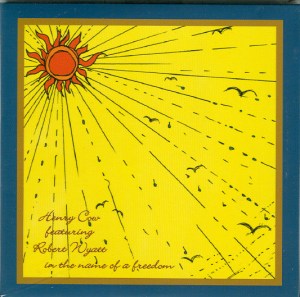


The collection of live recording from the 1975 tournée has been issued under the name of ‘Henry Cow featuring Robert Wyatt’ and showcases Henry Cow as a septet of Krause/Cooper/Frith/Greaves/Cutler/Hodgkinson/Wyatt.  Were it not for the less-than-perfect quality of the recordings, the triple CD collection could constitute a welcome complement to the legendary double LP “Concerts”.  The official album featured live recordings collected between September 1974 and October 1975.  This unofficial set concentrates on the concerts performed in May and June 1975.  Much of the material is similar to the official “Concerts”, but it predates the groundbreaking medley of themes that were included on side A of the double LP.  Indeed, “Concerts” were a misnomer – the breathtaking string of complexity on side A (“Beautiful as the Moon…  Terrible as the Army with Banners”) was actually recorded in BBC Studios in August 1975.  The bootleg brings two other versions of this uninterrupted sequence – one from a concert in New London Theatre (21 May 1975) and one from the photographically documented gig at Piazza Navona in Rome (27 June 1975). 


But both concerts add another medley of themes, unknown from Henry Cow’s official recordings, entitled “Muddy Mouse(s)” and subdivided into five movements: “Solar Flares”, “Muddy Mouse(b)”, “5 Black Notes and 1 White Note”, “Muddy Mouse(c)” and “Muddy Mouth”.  These are nothing more than concert versions of songs from Robert Wyatt’s LP “Ruth is Stranger than Richard”, where they appeared on side B.  This material was salvaged by Wyatt from a failed collaboration with Frith.  Frith was not happy with his own contribution to the project, but Wyatt went ahead and published it on “Ruth” – a record he was never fully satisfied with.  The main difference between the LP version and the Henry Cow’s live rendition is the presence of Lindsay Cooper on gnarly bassoon instead of Gary Windo’s bass clarinet. 


The three concerts (the third one being from Paris – Théâtre des Champs-Elysées, 8 May 1975) also replicate side B of LP “Concerts” with “Bad Alchemy” and “Little Red Riding Hood Hits the Road”.  However, “Ruins” is attached here to the suite “Beautiful as the Moon…”.  The London and Paris concerts also include long improvisations (11 minute each), which are unique.  The interplay achieved on the Paris version is particularly impressive. 


The lengthy collection ends, unexpectedly, with Kevin Ayers’s “We Did It Again”, known from Soft Machine’s first LP.  This (only) version was recorded during the encore at the Paris concert.  Apparently the band had not rehearsed this before.  If that is true, they pull it off impressively. 


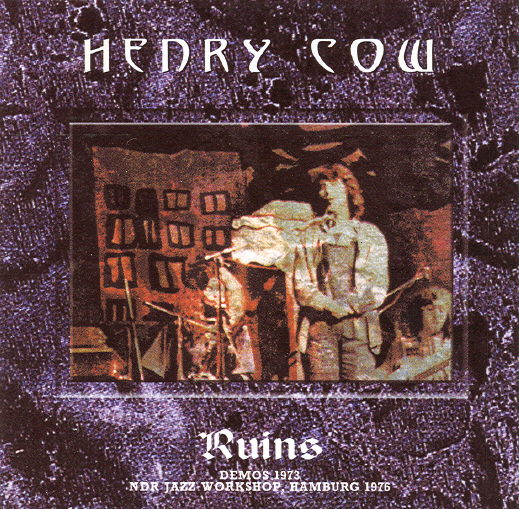
“Ruins”****
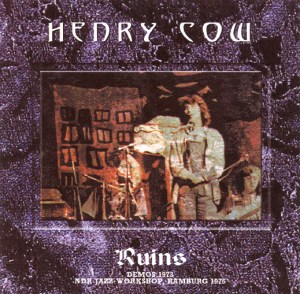


This double CD comprises one disc with exactly the same material as “Early Demos” described above and one disc with the recordings made 26 March 1976 for Jazz Workshop at Nord Deutscher Rundfunk (NDR) in Hamburg.  NB, the same material is also available on another bootleg simply entitled “NDR”.  It presents yet another version of the “Beautiful As the Moon…” suite, complete with “Ruins”, but with a distinctively novel keyboard work.  The line-up is the sextet of Frith/Hodgkinson/Greaves/Cutler/Cooper/Krause. 


This live in studio document is, apparently, the last occasion to hear John Greaves with the band, as he officially had left the band on 13 March to work with Peter Blegvad on “Kew Rhone” (recorded in New York in October 1976). 


The sound quality is very good. 


“Kaleidoscope”****
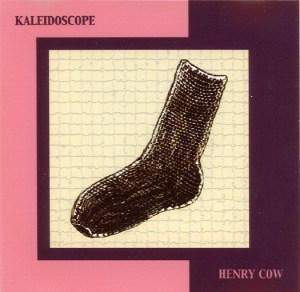


Two lengthy improvisations (44 and 47 minutes, respectively) were recorded during the tour on 26 May 1976 in Trondheim, Norway.  Henry Cow apparently played there as a quartet of Frith/Cutler/Hodgkinson/Cooper.  The material is very interesting and unique, with a particular focus on acoustic piano parts and lengthy openings with flutes and piccolos.  Unfortunately, the sound quality is acceptable at best. 


 “Unknown Session”******


This is a collection of recordings made apparently during the same Scandinavian tour in May 1976.  According to the description, the band, captured live in Stockholm and Göteborg appeared as a sextet (Krause/Frith/Cutler/Hodgkinson/Born/Cooper).  There are some doubts concerning this line-up.  First, it is surprising to find here Dagmar Krause in such a magnificent form – most historians point to her absence from the tour.  Still, she clearly is present.  These would also be the earliest known recordings with Georgie Born on bass, if she really is present (?).  It is known that during the auditions she edged formidable competition from Uli Trepte and Steve Beresford.  However, I would be very surprised if she did, in fact, manage to join this tour, as purported by the description.


There are seven lengthy compositions here, one of which spans over 20 minutes.  They are radically different and more evolved than the better known fruits of the 1975 concerts.  Only on two of them can I detect familiar themes.  It also includes some of the most unusually psychedelic guitar playing from Frith.  The sound quality is very good. 


The material also includes the anthemic folk song “No More Songs”, until recently undocumented elsewhere. 


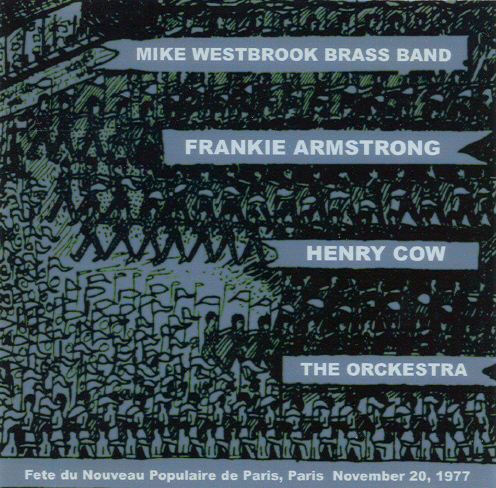
“Live in Paris, November 1977”****
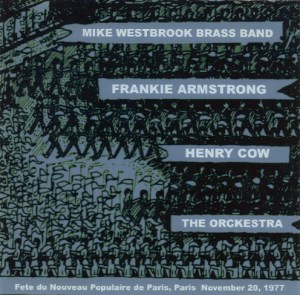


Spanning two CDs, this live recording is important for being a rare opportunity to ascertain the validity of claims and counterclaims about The Orckestra – the collaboration of Henry Cow with Mike Westbrook’s Brass Band and vocalist Frankie Armstrong.  The document stems from a concert taped on 20 November 1977 at Fête du Nouveau Populaire in Paris, eight months since the beginning of this ambitious collaboration.  In addition to the sextet of Cooper/Cutler/Frith/Krause/Hodgkinson/Born, we have here Mike Westbrook (piano, euphonium), Dave Chambers (soprano and tenor saxophones), Kate Barnard (piccolo, tenor horn), Paul Rutherford (trombone and euphonium), Phil Minton (trumpet) and Frankie Armstrong (vocal).  Again, Dagmar Krause’s participation is surprising, given that she had officially “left” Henry Cow a month before. 


There are all together 11 tracks.  The music is fanfaric, uplifting and quite distinct from Henry Cow’s other material, relying predominantly on Westbrook’s compositional framework.  It is most rewarding when brass sections surge from impressionistic landscapes, prodding the entire ensemble into transformative activity that marries New Orleans marching band and lateral group improvisation.  If you are able to imagine Music Liberation Orchestra overlaying “Nirvana for Mice”, “Ruins” or “Beautiful as the Moon” you are close.  The brass section acts as a powerful enhancer, interspersed with Phil Minton’s or Paul Rutherford’s lyrical solos.  On the other hand, Frankie Armstrong’s black singing seems a little out of step with the rest of the Orckestra.  In the second half of the concert, the band also performs excerpts from Kurt Weill’s “Dreigroschen Opera”.  Both Born and Cooper would continue to collaborate with Westbrook in future.


Unfortunately, the sound quality ranges from poor to acceptable, at best.  It prevents us from adequately judging how sonically successful this notorious project was. 


“Industry”****
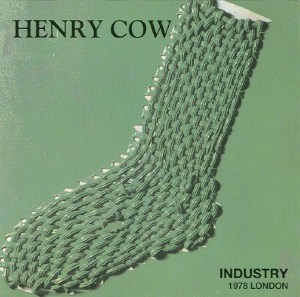


This is Henry Cow with one foot in the grave, most likely stripped down to a quartet of Frith/Cutler/Hodgkinson/Cooper.  The recording was made in the Spring of 1978 in London, probably some time between its unfortunate tour of Spain (with Phil Minton) and the last series of concerts in France and Italy.  In other words, this is Henry Cow shortly after the official birth of Rock In Opposition movement (12 March 1978), which the band and Nick Hobbs championed.  The material encompasses three improvisations (21 minutes, 12 minutes and 8 minutes), as well as “Slice”, “Ruins”, material from the then upcoming LP “Western Culture” (“Industry” and “Look Back”).  Here again, the same “Recommended Records Sampler” versions of “Slice” and “Viva Pa Ubu” appear as a questionable bonus material. 


The unique improvisations capture Hodgkinson in an almost Middle Eastern mode on clarinet.  There is also a self-declared “Unreleased Number”, which is in fact an early version of Fred Frith’s “Time and a Half”, which eventually crept onto vinyl when Curlew recorded it in 1983-84 (LP “North America”). 


The sound quality ranges from poor to acceptable. 


 “Culture de l’Ouest”***
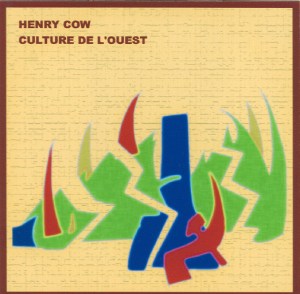


A double CD with recordings made in Lyon, France on 6 June 1978.  Most of the material is known from other versions etched onto vinyl either in January of that year, or over the following two months (July-August) at Sunrise Studio in Switzerland and published on LP “Western Culture”.  However, in addition to “On the Raft”, “Falling Away” and “Industry”, we are served here with one unique improvisation and hitherto unknown live versions of “Viva Pa Ubu” and “Slice”. 


The line-up here is Frith/Cutler/Hodgkinson/Cooper/Roelofs, augmented by a special guest – a pre-“Outside Pleasure” Henry Kaiser on guitar.  It is unclear who plays the booming bass part.  It does not seem to be Frith, unless Kaiser impersonates his style to perfection.  It could be Lindsay Cooper on “air bass”, or it could be Kaiser himself.  The poor sound quality makes it impossible tell. 


It is known that Yoshk’o Seffer also performed with Henry Cow around that time, but so far I have not found any of these recordings.


As a (superfluous) bonus, the second disc adds (again!) the original studio recordings of “Slice” and “Viva Pa Ubu” from “Recommended Record Sampler”.  We know that Georgie Born participated on one of these cuts, before her eventual departure in January 1978. 


***


When in the early 1990s the first CD reissues surfaced in the market, several bonuses were squeezed at the end of the original material, distracting rather than supplementing the wholeness that these deservedly legendary recordings constituted.  It was always hoped that they would reappear in full glory on a separate disc.


A long-awaited 9CD box of archival recordings and a 80-minute DVD are now expected to appear sometime this year to celebrate 40 years since Fred Frith and Tim Hodgkinson first thrashed it out in a noisy collaboration (apparently opening for a Pink Floyd concert).  Chris Cutler et al have seriously stretched the patience of fans who waited so long for the official versions of Henry Cow’s historic recordings.  But patience will be rewarded.  Apparently Bob Drake did a great job cleaning the archives.


According to some previews available online, the commemorative boxes will contain elements of the material included on the above-mentioned bootlegs “Ruins” and “Kaleidoscope”.  This is the perfect time to dream, and in this ideal dreamworld, my own wishes would incorporate the following historical sessions/concerts:


  • Any material of the early trio of Frith, Hodgkinson and Andy Powell (bass).  Powell is sometimes credited with exposing the founders to composer Roger Smalley’s ideas of extended composition (1970). 
  • Any material left over by Chris Cutler and Dave Stewart’s Ottawa Company, in particular their “Study for Keyboards” and Zappa pastiches (1971)
  • Any material from Robert Walker’s production of Euripides’s “The Bacchae” (1972)
  • Any material from John Chadwick’s production of Shakespeare’s “The Tempest” (1973)
  • Any good quality version of “Hold to the Zero Burn” from the late 1970s. 
  • Professional quality recordings of the Orckestra (1977)


Robert Wyatt once famously quipped that Henry Cow were “the best band in the world”.  There are many things in the world that separate my own Weltanschauung from Wyatt’s.  But I do agree with him on this particular superlative.  This judgment has survived too many years unchallenged to be dismissed any time soon. 
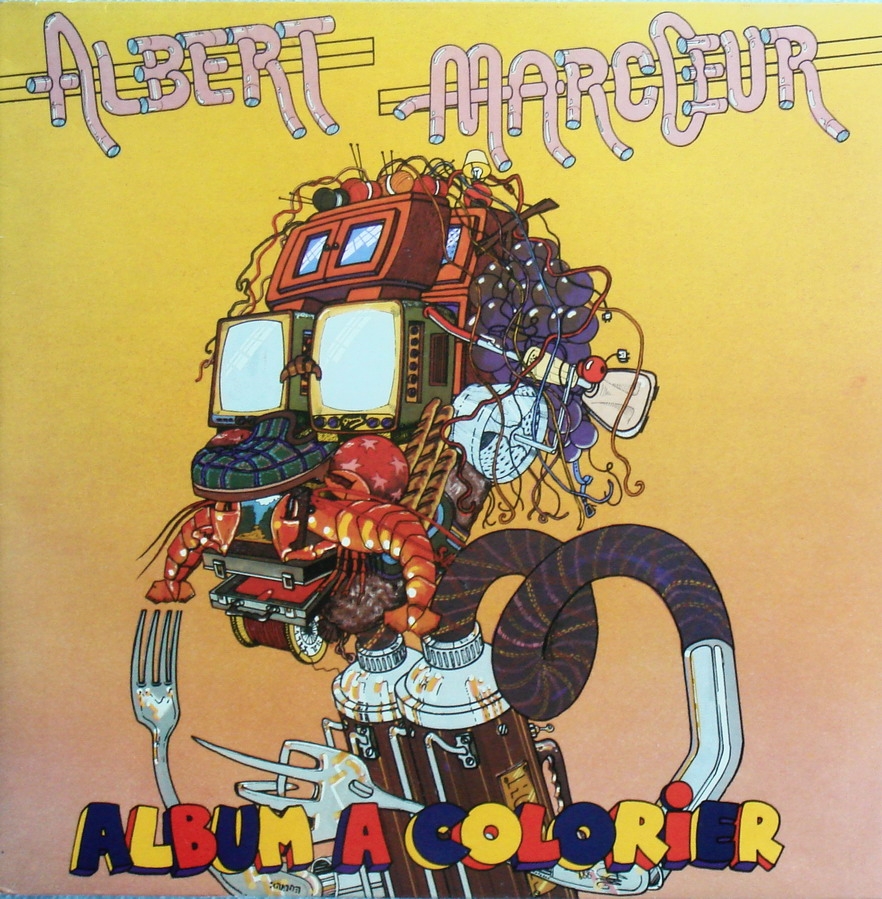
Albert MARCOEUR: “Album à colorier” ******

Recorded 1976


Originally from Normandy, Albert Marcoeur defuses all attempts to classify his art.  In the Anglo-Saxon world, his loquacious, non-linear style is most often compared to Zappa or Captain Beefheart.  Elsewhere, faute de mieux, he is sometimes thrown into the RIO category.  The reasons could be historical (for example his legendary concerts with Zamla Mammaz Manna), but are nonetheless misleading.  It is known, for example, that Marcoeur has been rather critical of Chris Cutler’s ideology (or drumming) and reserved vis à vis improvisation. 


And in France?  In France he has been an irritant.  Many years ago, when I was still on the prowl for the elusive “Armes et cycles”, I enquired about his records at one of Paris’s premier second hand jazz shops, not far away from Pantheon.  “Ah non!” exclaimed the jazz buff.  “Non, et non.  Albert Marcoeur, c’est de la variété française!!!”.  Yet, this denigration is as questionable as those RIO or Zappa parallels.  Certainly Marcoeur never shared the glossy stages of France’s arch-moronic pop media. 


Although Marcoeur’s beginnings were in party music, he developed his style by experimenting spontaneously in studio.  The results were short, but tightly structured mosaics of rhythmic turns, capsizing harmonics, atmospheric contrasts, melancholic interjections and self-deprecating gags.


He certainly cannot sing, and therefore does not even try.  Instead he recites, half-sings, murmurs, comments and digresses.  But from his lyrics emerges a fragile, fidgety, naive mind questioning the absurdities of daily life.  His commonsensical attacks on non-reflective schematism are witty and engrossing.  His poetry, as his music, draws its vitality from brevity.  What we express in entire symphonies, Marcoeur encapsulates in a stanza.  Our epics are his aphorisms. 


Monsieur Lepousse

This ode to crowded loneliness greets us with street honking.  Everyone avoids Monsieur Lepousse, or so we learn throughout this saccadé, nervous number.  Christian Leroux’s signature guitar beadwork is endorsed here by a male chorus and clarinets courtesy Pierre Vermeire and Albert Marcoeur himself.  Marcoeur’s half-devoiced “singing” introduces us to the universe of the solitary character.  The structure of the song is fractured several times and when the narrator “steps over to the other sidewalk” to avoid Monsieur Lepousse, the time signature changes abruptly.  This bold, vigorous introduction grinds to a halt when a retarded radio commercial cuts in with a meaty Hammond organ. 


Le fugitif

A embarrassing story that could draw many interpretations.  It opens with a party talk, until a Mark Boston-like angular bass (Pascal Arroyo) rivets our attention to the periples of the narrator seeking refuge in the restrooms of coffee shops.  Despite the full-blown orchestration encompassing guitar (François Ovide), bassoon (Denis Brély), soprano saxophone (François Lassale), bass clarinet (Pierre Vermeire) and alto saxophone (Albert himself), the lead vocal has been mixed up front, à la française.  The dominance of the voice in the mix and the revolutionary character of Marcoeur’s infantile Weltanschauung generated exorbitant expectations at the time of these recordings.  But the cult following that his poetry accrued was later disavowed by the artist.  Here, he delivers the dark-humored text at hyper-speed.  Back in the restroom, the narrator is startled: “someone wants to enter” – his panic is accentuated by a vicious wind section fanfare which sounds like proto-punk jazz avant la lettre.  Were it not for the vocal mix, this could be Doctor Nerve’s downtown greeting. 

Our character is told that the café will close soon; he picks up a bundle of used toilet paper and leaves the premises.  Nobody noticed that where he was – or so we are told by a comforting trio of bass, guitar and saxophone.  He moves to another café, followed by a voyeuristic phrase from the saxophone. 


Le nécessaire à chaussures

Le nécessaire à contrastes…  Between a plaintive murmur and an ultra fast, anguished vocal eruption that prefigures punk.  Against an incessant, jerky fusion bass (Pierre Vermeire), two drums (Gérard and Claude Marcoeur) and guitar, Marcoeur spits out his story of an onset of depression after the loss of the shoeshine set and the partner’s indifference to the character’s plight.  The piece develops around a pathological clash between the hushed abandon of the storyteller and explosive vandalism from trumpet (Gérard Nouvel), trombone (Pierre Vermeire) and clarinet (Albert Marcoeur).


Le père Grimoine

With acoustic piano, Marcoeur delivers, sotto voce, a melancholical elegy for an old man who dies in his bed, witnessed only by his orphaned, thirsty plants.  The bass and drum duo of Pascal Arroyo and Claude Marcoeur is pleasantly impressionistic and emollient.  An effete, wimpish chorus sidesteps the satirical minefield and the heartfelt mood is further enhanced by Marcoeur’s breaking voice.  He quavers down to an Italian-style recitative with acoustic piano, only to receive a calibrated support, again, from the mellow rhythm section, the underwhelming chorus and bandoneon (Michel Cousin). 


Doctorine

This begins with an exotica-styled percussive intro, quickly overturned by a Middle Eastern flute (François Lasalle).  Imperceptibly, the dynamic surges, culminating dubiously with an overblown, strained bass clarinet sforzando and a chorus of pseudo-castrati.  This will remain an instrumental étude, distinguishing between a melodious climax, an overdrive bass and the ever vulnerable, sheepish chorus.  Despite its over-reliance on sentimental tail-offs, it works.


Le jus d’abricot

After a brief guitar and bass opening, a fanfare of fake jazz saxophones and balafon snaps with a force of a category five hurricane.  But a surprise is just around the bar.  Were it not for the obsessional, husky sax screech, we would probably be beguiled that la chanson française n’est pas loin.  In fact, Marcoeur’s non-melodic, ultra-rapid recitation is sequestred by a refrain of cleanly soaring notes that could turn him into a radio personality.  What saves him from the ignominy is the Microscopic Septet-like arrangement for strident horns (Peter McGregor, Marc Duconseille, Gérard Nouvel, Pierre Vermeire) balafon and bongos (Gérard Marcoeur).  You have to go back to Michel Portal’s early recordings (e.g. “Splendid Yzlment”) to find a similarly dissenting reed orchestration in France.


La cueillette de noix

The absurd text about a nut collector, obsessed with his annual ritual, eventually turns into a Marcoeurian version of Nicene Creed…  The texture of the composition is entirely subjugated to the power of the text.  It adumbrates, illustrates, contrasts and obscures the surrealist narrative.  Guitar, bass and baritone saxophone enter impassively, camminando.  The lullaby-like tenderness sounds somewhat fallacious, doubled with dissonant piccolos, reed pipes (Lassalle and Vermeire) and a choir of naughty boys.  As often in Marcoeur’s “songs”, constancy and continuity are poor bets.  All of a sudden, guitars and a rhythms section pick up in a distinctly ‘fusion’ mode.  François Ovide’s narration is equally transient.  A barrage of flutes and guitars strikes, tangentially accompanied by a very liberal percussion.  The bizarre ending of the “prayer” is lined with very secular saxophones.


Elle était belle

One of Marcoeur’s most memorable stories is rendered atemporal as a ballad of infatuation.  The narrator – a young saxophone player – fancies a club-going beauty, but his emotions are distinctly fragile and girlish.  Whereas in other songs, Marcoeur’s observations partake a whiff of fresh infantilism, the expressive confessions of this narrator are almost vaginal.  The male choruses reiterate the character’s longing after an inaccessible object of desire.  But then, Marcoeur’s rendition falls into a quasi-comical opera buffo territory.  “What is the name of the instrument that you play?” she asks.  “I play saxophone.  It’s ugly, she says, I like guitar better”.  The plasticity of the male chorus throws us back to the 1960s style, yet avoids the farcical reefs of doo-woop hoods or surf-‘n’beach far niente.


Fermez la porte

Pierre Vermeire’s only composition on this record is a juxtaposition of eavesdropping on a conversation, door slamming and a fin de siècle-type brass band crowned with a puerile piccolo.


La d’dans

The band’s tour de force.  The group is finally revealed as a potent dynamo of woodwind power and guitars.  Marcoeur shouts out a bizarre story of a workman whose face was covered with dirt that turned into a veritable mask, until the day it fell off and he had to look for a new job.  In a deranged exhibit of metatextual self-deprecation, the ramshackle chorus begins to quarrel, but the recording engineer encourages the gang to plod on.  We will never know if the musicians really tell us something or just play, maybe play at playing themselves.  The amusing mirror images distort Marcoeur “singing”, so closely shadowed by the guitar and exquisite drumming from Marcoeur brothers (Claude and Gérard).  The raw power of the ferocious, brazen reed section commands respect.


Ouvre-toi

In a 180 degrees reversion, a very sugary brass band illustrates the conative monologue.  “Open yourself, but close the door”, supplicates the author. 


***


If you understand French, or can get hold of the translations, then you’ll never tire of Marcoeur’s talent as a composer and a lyricist.  For everyone else, I recommend in particular positions 1, 2, 4, 5 and 7.  Position 12 is a marvelous, albeit short, animated film graced with one of Marcoeur’s familiar themes.  The most recent addition is, unfortunately, less convincing.


1. Albert MARCOEUR: “Albert Marcoeur” (1972-73)

2. Albert MARCOEUR: “Album à colorier” (1976)

3. Albert MARCOEUR: “Armes et cycles” (1979)

4. Albert MARCOEUR / THIS HEAT: “Revue cassette Tago Mago” MC (1979)

5. Albert MARCOEUR: “Celui où y’a Joseph” (1983)

6. Albert MARCOEUR: “Compte rendu d’analyse” SP (1984)

7. Albert MARCOEUR: “Ma vie avec elles” (1985-90)

8. Albert MARCOEUR: “Sports et percussions” (1992-93)

9. Albert MARCOEUR: “M.a.r. et cœur comme le coeur” (1982-94)

10. Albert MARCOEUR: “Plusieurs cas de figure” (1998-2000)

11. Albert MARCOEUR: “L’apostrophe” (2004)

12. Albert MARCOEUR: “Bus 24” DVD (2006)

13. Albert MARCOEUR: “Travaux pratiques” (2007)


One of Marcoeur’s pieces can also be heard on the compilation entitled ”Pièces pour standards et répondeurs téléphoniques”.


Over many years, Marcoeur created dozens of musical scripts for performances and other media, but, unlike, say, Amy Denio, the artist has decided not to publish them in any form.  On the other hand, Sonic Asymmetry clings to the hope that the concerts that led to the creation of Von Zamla will eventually be published one day. 


Early in his career Marcoeur appeared on François Bréant’s records, but this was a very different music.  However, three members of Bréant’s early band joined Marcoeur’s sessions. 

Published in: on July 26, 2008 at 8:24 am  Comments (6)  
Tags: , ,

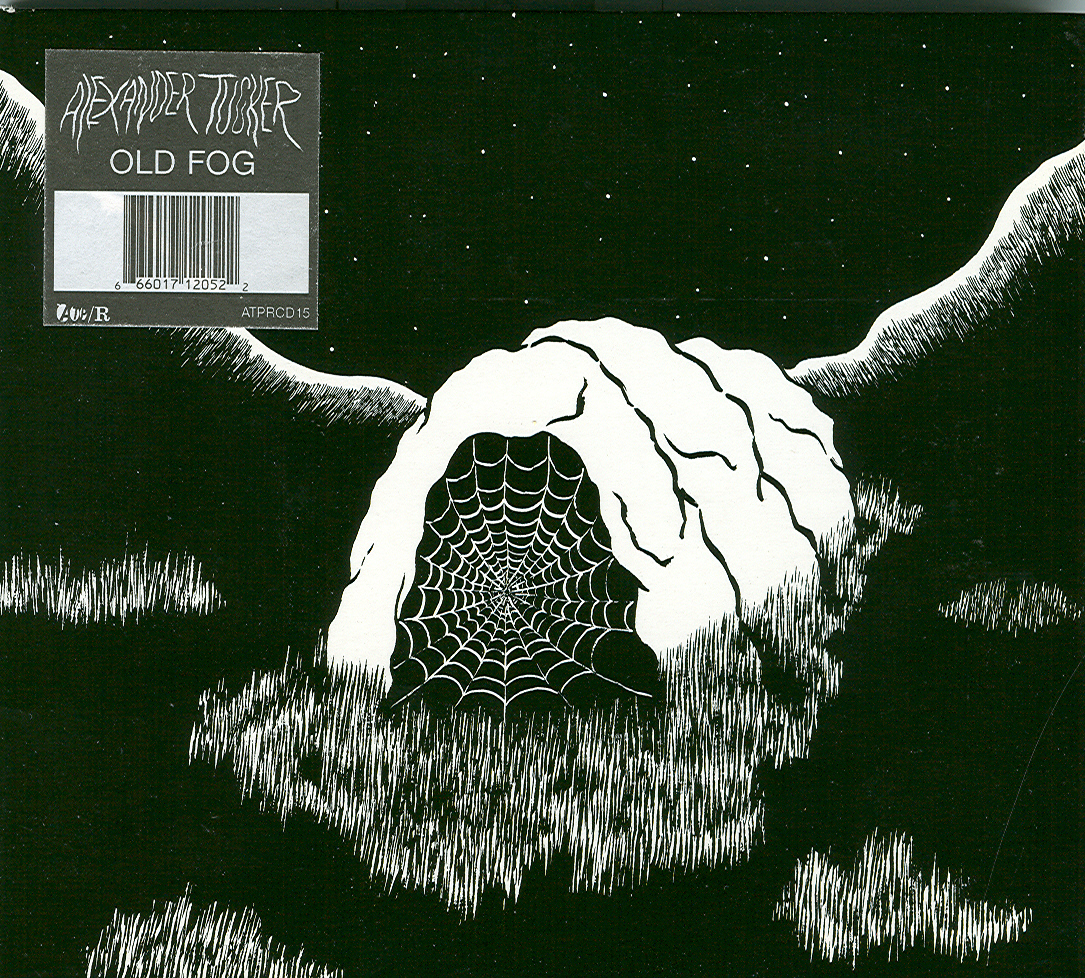
Alexander TUCKER: “Old Fog” ****

Recorded 2003-04


In another era, Alexander Tucker’s productions would have been thrown into the “singer-songwriter” category.  Luckily, he belongs to those who make such taxonomies obsolete and the associated glossary distinctively old-fashioned.  Tucker does play “songs”, but purposefully strays from the well-trodden structures onto divergent pathways of ruminative improvisation or libidinal freak-out.


Still, his writing can be elegant and memorable.  He excels in bucolic ballads delivered on string instruments (mostly guitar and banjo) subjected to idiosyncratic de-tunings and re-tunings. 


Tucker has been rubbing shoulders with some of the alternative music greats on both sides of the Atlantic – Jackie O’Motherfucker, Sunno)) and Guapo.  We will certainly hear more from him in future.


Hag Stones

The strophic song opens with two dancing guitars endowed with unconventional tunings.  They trace a self-replicating figure in major scale with bells nurturing the determined, ballabile beat.  Within this pendular structure, chords reiterate until a plaintive voice intones the tearful complaint “where are my friends and where do they live?”  A countertenor (rather than falsetto) lulls us deceptively in its tacit despair: “early to rise and early to fall”, we hear.  The humble (and hummable) tune invites the body and soul to sway with it.  Finally Tucker picks up his banjo and awakens us up from this intoxicating slumber by improvising respectfully within the meter. 


Old Fog

A ringing guitar picking is reminiscent of Only a Mother’s folksy side.  The banjo and guitar tunings convert these instruments into strident, shackled, strung up torques – something Steven Stapleton attempted many moons ago.  Here, the vocal placement forces the strings to slide along the scales after each stanza, before Tucker returns to the Anglo-Irish picking style.  An unstable harmonic stasis is conjured up by a melodica, organ or some other reed instrument capable of sustaining lengthy notes.  Tucker allows his electric guitar to reverberate, while pick-scraping the acoustic instrument.  The former lifts off into outer space, thus disambiguating the decision to name the record after this increasingly schizophrenic track.  And yet, the OAM-style picking soon returns to remind us that this is a “song”.  Joel Lewis guests here on vocal.


The Patron Saint of Troubled Men

A meeting between a banjo and a zither, bowed for color (synaesthesia would dictate Aspen gold).  The multi-vocal wailing nearly brings back the memories of Abbey Roadian harmonics circa 1967. 


Phantom Rings

Bowed string notes usher a drifting, analgesic guitar of “More” heritage.  The strings produce a high-pitched drone for the laminated, flabby electric guitar solo.  Then the droning swell becomes oppressive and tails off before acoustic guitar picking returns to its minimal setting.  Sobering harmonic visits from an accordion turn the instrumental exchange into a playful and well correlated exposé.  The falsetto soars and wanes in its subdued, cryptic, veiled manner.  No wonder that Tucker has been compared to Six Organs of Admittance. 


Alhadeff Music

In this abstract interlude, a pre-school acoustic piano co-operates with the ever nostalgic African thumb piano, bowed zither, melodica (or is it harmonium?), drums and cymbals.  Initially the vectors are divergent and occasional confluence seems rather unintended.  The playing is obviously multi-tracked, but lax and unshowy.  Tucker does not go as far as to use lapses of silence.  Instead, he appears interested in the accumulation of timbres and free-form search for functionality.  The piece remains essentially directionless, except in the accordion parts. 


Of Late

Another guitar and banjo hymn to early sunrise optimism.  The autotrophic step-ups are regular and homely.  Then the solo guitar picking takes over, devising more figurative vistas.  Tucker controls the instrument’s resonance perfectly and juxtaposes it (again) with detuned scraping on the second guitar.  His faint voice always appears slower than the guitar-measured tempo, but he never fails to fall into the bar.  There is a seductive parallelism in this treatment. 


Welsh Harp

Stealing toys from Pascal Comelade’s playroom, Tucker shows off here a small xylophone and a tired mechanical clock.  The idiophonic tremolo invites guitar and banjo for a plurality of strokes, grazes and accents.  Melodically it never goes anywhere.


Hand of Reign

This longer composition embodies the more experimental (and electric) rock side of Tucker’s.  It relies largely on a guitar drone and crested waves from a detuned acoustic guitar, evoking Bardo Pond’s most demented moments.  The droney overburden intensifies inexorably, carrying an echoed, psychotic vocalize and a feedback engine.  Then the drone coughs, leaving out vacuum spaces like a Cantor Set.  It allows for the acoustic guitar to tread to the fore, with the electronic whir now transformed into discretely distributed articulation.  With the rate of oscillation changing, the auditory illusion places the vocal in the center of attention, along with the drummer and his poetically muted metals (Paul May).  This excellent specimen of wordless psychodrama ebbs away slowly, but predictably.


Sung into Your Brightning Skull

After that impressive climax, it is not surprising that we are back in the good ole’ banjo territory all over again.  The track offers a gestaltic closure, scooping formulas from the first “Hag Stones”, heard 46 minutes before.  The song recapitulates the mood from the entire record – ethereal and tranquil, yet enigmatic and spellbinding. 


***


All of Tucker’s records are recommended, but I have not (yet) heard the most recent position.  “Old Fog” remains my personal favorite.


Alexander TUCKER: “Alexander Tucker” (2000)

Alexander TUCKER: “Old Fog” (2003-04)

Alexander TUCKER: “Furrowed Brow” (2006)

Alexander TUCKER: “Portal” (2008)

Published in: on July 23, 2008 at 8:47 pm  Leave a Comment  
Tags: , ,

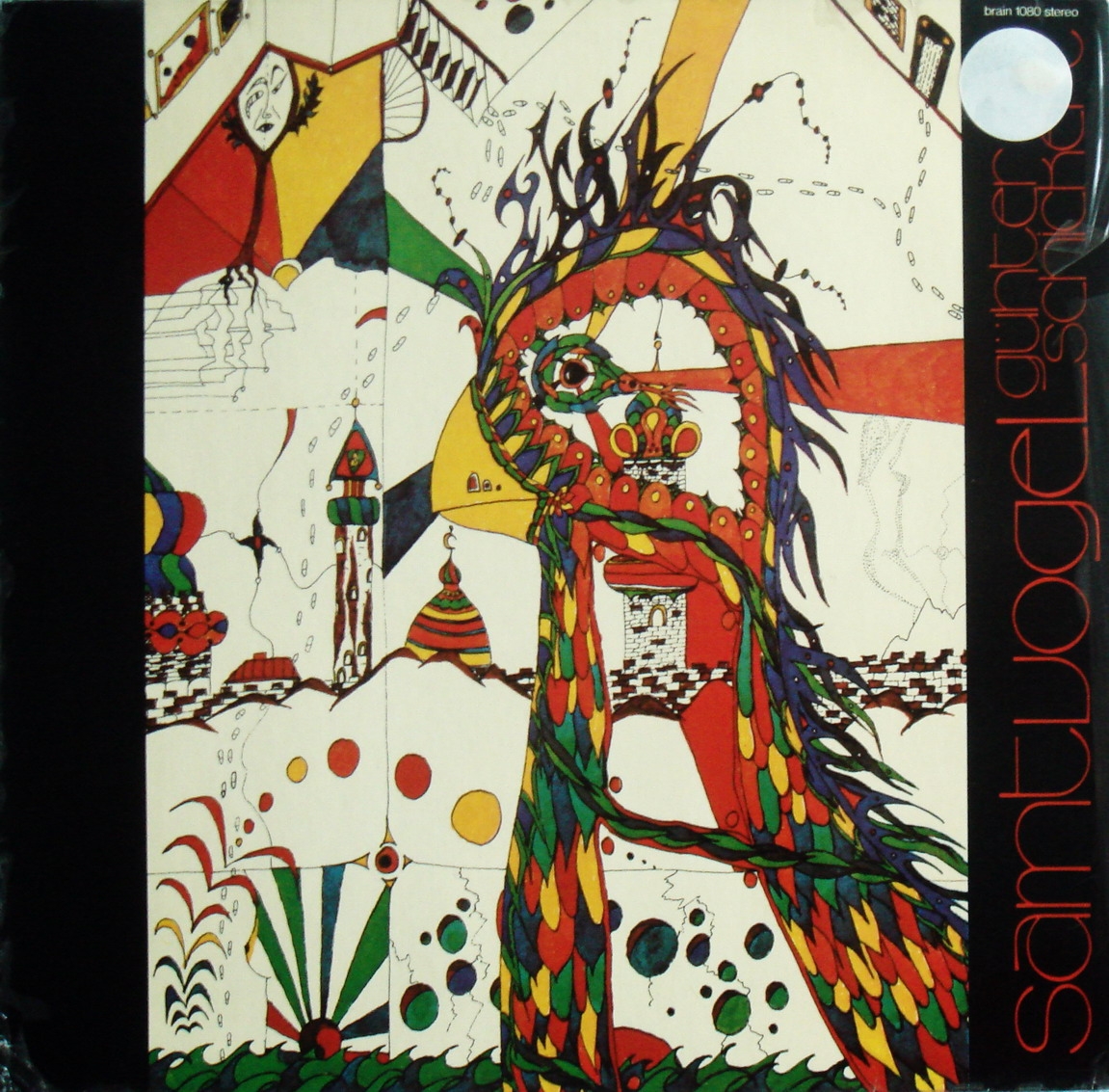
Günter SCHICKERT: “Samtvogel“ ******

Recorded 1974


Berlin-based Günter Schickert has made a lasting contribution to the art of metric multiplication through masterful control of rhythm and pitch patterns on his echoing devices.


Trained as a trumpetist, Schickert’s opted for electric guitar as his main instrument.  Whereas academic and downtown artists resorted to mathematical sources of inspiration (e.g. Fibonacci series), Schickert remained an intuitionist – layering coherent scales by playing several tracks at the same time.  His results are to mathematics what Möbius strip may be to visual art. 


Schickert avoided the pitfalls of sequencer automatism, which reigned supreme in the mid-1970s.  Although other German musicians eventually attained similar results, Schickert single-handedly created and destroyed an entire musical genre.  Few of his followers ever matched the uncanny precision of his concatenated rhythms and pitches. 


He was joined by Axel Struck and Michael Leske to form GAM in the second half of 1970s.  It is not clear if Schickert has been musically active since the early 1990s.  His recordings have remained undeservedly obscure. 


Apricot Brandy

Like an amalgam of hypnagogic visions, “Apricot Brandy” relies on an unlikely combination of molecular meters, bubbled up by Schickert’s guitar and the maestro’s pickled, ineffectual voice.  The spiderweb of his guitar-generated waves gradually fills up with masses of sluggish echoes and counter-echoes.  Some accelerate into a short-lived dash and eject like bolides. Others slither leisurely and ferment into mucus of inexorable retardation.  From this incessant vortex emerge self-reflecting voices and an increasingly rectilinear, almost staccato guitar reverb.  Schickert’s voice is multilayered – warm, close and incomprehensible, but more distinctive in the background.  The blurred images submerge the spellbound listener until the 6-note theme recurs shortly before the recess.  It rounds off this magical moment of rock avant-garde and raises the question whether later artists who strayed into similar territory (DDAA, Trembling Strain, Gilles Rieder, Frajerman) were cognizant of Schickert’s groundbreaking statement here. 


Kriegsmaschinen, fahrt zur Hölle. 

This 16-minute composition begins with a faint shadow of rotating blades – a rotor, or maybe flywheels.  Two or three high pitch sounds flicker indifferent to inconsequential sonic effects that leak and ebb away without follow-up – an occasional guitar chord, an anemic tinkle, a paltry subterfuge.  Such sonic incommunicados are finally conquered by Schickert’s trademark – a resonating cascade built from a multiplication of legible, carefully defined pitches.  On this foundation, the “rotor” reverb constructs a quilt for a sequenced “melody”.  Schickert’s manipulation of echoes will cause fantasmic auditory misperceptions.  It sounds as if as many as 3 or 4 guitars were playing together – either in unison or in some redefined harmonic arrangement.  The prevailing beat is crowded with additive fill-ins, leading to an illusion increased tempo – a mere illusion only, as in a 16-bar Indian tintal.  Most of time, Schickert’s vowels resound without any apparent semantic content, but when the dynamic slumps, he repeats heavily sequenced slogans directed against “war machines”.  The dominant pattern is of abrupt dynamic swells and a more measured de-emphasis.  These shifts in dynamics are coupled with intra-meter echoing, generating pleasantly disorienting, almost hallucinogenic sensations.  The sheer avalanche of helical superposition makes it impossible to build expectations on when the next cascade will materialize.  If there is a broadly linear trend, it lies in the guitar assaults, which multiply and increase the pitch range at each return. 


Wald

“The Forest” is a more meditative piece, organized around a mysterious, bionic call-and-response, drenched in inimitable echo.  In this tender, almost pastoral setting, the undulating effects are glassy, endowed with sleek resonance.  Somewhere behind, lurks the now familiar “propeller”, but it does not (yet) disturb the arborescent, cheery aura.  After several iterations a bass line ominously surges underneath.  A fast alternating tremolo of high notes steps in, then vanishes only to return without resonance.  The proceeding is at the antipodes of the woolly, comfy notes that cradled the first several minutes of “Wald”.  The track gains in impetus and sonorousness.  Low-end “rotor” sound whipsaws, alternating with higher pitched notes, but without dissonance.  Throughout, Schickert sticks to his picking style – eschewing the automatism of analogue sequencer that dominated much of Berlin music at that time.


***


“Samtvogel” left over a primacy effect that was difficult to overcome.  Still, the formula retained its attractiveness on the other recordings as well.


Günter SCHICKERT: “Samtvogel” (1974)

GAM: “1976“ (1976)

GAM: “Eiszeit“ (1978)

Günter SCHICKERT: “Überfällig” (1979)

Günter SCHICKERT: “In den Zeichen von Sabine Franek-Koch“ (SP) (1981)

Günter SCHICKERT: “Kinder in der Wildinis” (1983)

Günter SCHICKERT: “Somnambul“ (1980-1994)


Schickert participated in other obscure bands in Berlin – Ziguri Ego Zoo and UFOrchestra, the former of which mutated into No Zen Orchestra, leaving over one, highly recommended experimental rock record:


NO ZEN ORCHESTRA: “Invisible College“ (1987)

Published in: on July 21, 2008 at 8:22 pm  Comments (4)  
Tags: , , ,

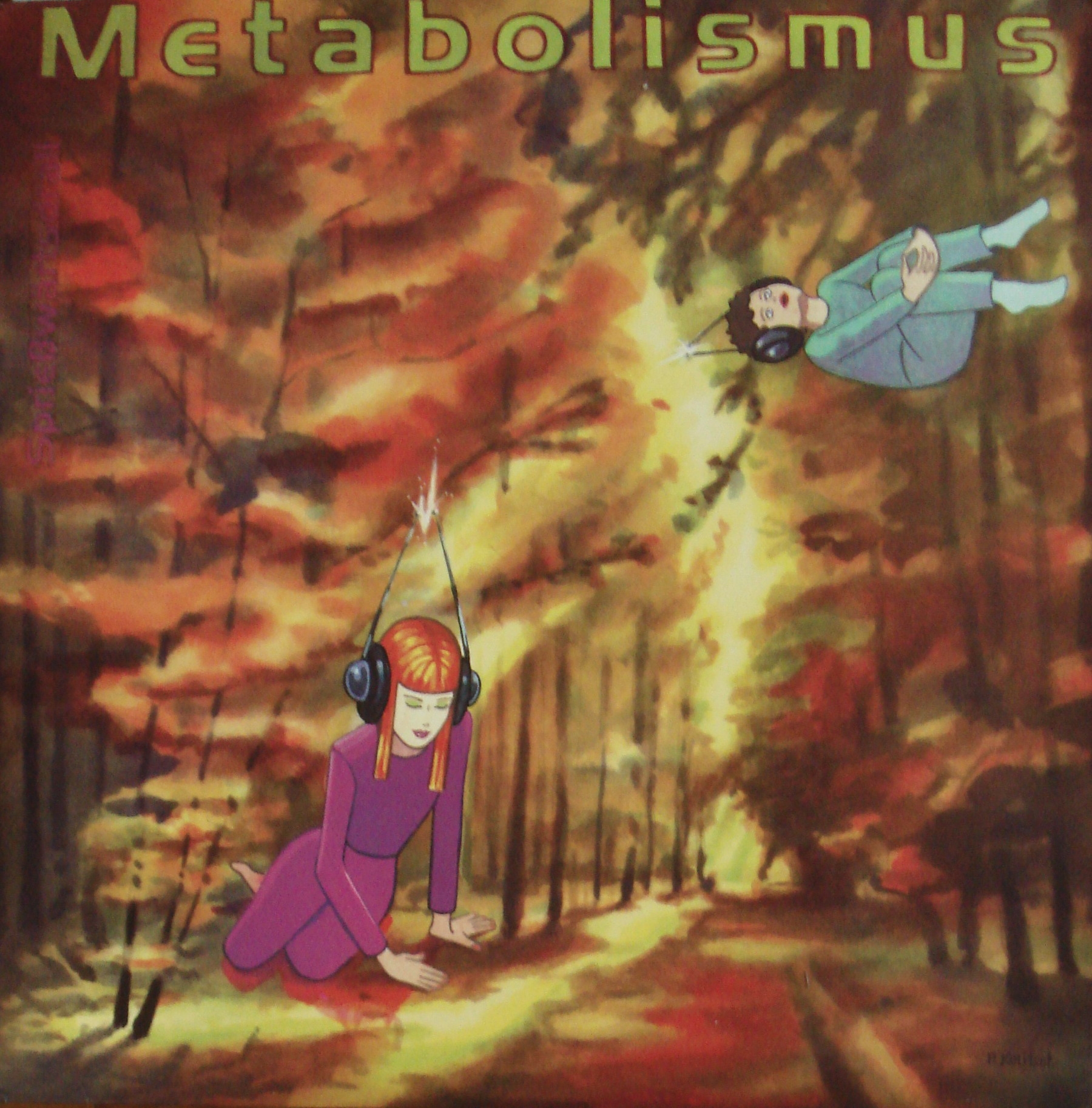
METABOLISMUS: “Sprießwärtsdrall” ****

Recorded 1995-98


More of a congregation of like-minded musicians than a ‘band’, Metabolismus is a moniker centered on Stuttgart-based personalities of Thilo Kuhn (guitar, organ), Werner Nötzel (guitar, strings) and Thomas Schätzl (bass, guitar).  They began taping their musical trial and error in early 1990s, occasionally publishing the fruit of their sessions on limited series cassettes, vinyl and, more recently, mini-CDs. 


Purposefully or not, their records usually juxtapose sessions realized years apart – in slightly different line-ups and certainly different stages in their musical and non-musical lives.  Their early attempts trod all over the ground – from Kim Fowley to Beefheart to folk, but by late 1990s, Metabolismus found their own voice.  In constant (metabolic) evolution, they successfully transformed the myriad of influences into an appealing, non-schematic eclecticism.  Although experimental in intention, the music proves to be quite relaxing in its impact, not least thanks to intoxicating, syncopated rhythms. 


Michael Paukner and Dietmar Köhle regularly show up on Metabolismus’ recordings.  Samara Lubelski appeared on at least two records in the late 1990s. 


Rabenloch

The record begins with a host of sonic ephemera: hyperreal drumstick gouache, speed-reformulated vitreous effects, equidistant from sprints and molasses.  An energy-transforming modulator looms, exhibiting a range from sizzling to wooly to ghoulish.  This rather detached display of associationist electronics comes packaged with some acoustic guitar strumming. 


Schnee von gestern

From this spatiotemporal domain originates a rhythmic pattern.  Twined with a quaintly non-resonant electric guitar it yields to a concatenated metric evolution, mostly aptly assigned to the heritage of Karuna Khyal.  As it snakes surreptitiously, a sarod-like vibration condensates along the metric line.  The dosage of rhythmic subpatterns becomes effortlessly self-looping and quasi-periodic.  Thin veneers are overlaid – an eerie string here (Werner Nötzel), bird chirping-like whistling there.  Gradually, the increased dynamic begins to carry a heavier ballast, but in a controlled fashion.  An overloaded guitar gasps and, finally, the rhythm breaks down into micro-buzz.


Blinker

We are treated with wind effects and gnarled ”clavinet“ notes shinning up and down the scale.  Very dovish, discrete distribution of percussive sounds clicks and clocks behind.  We can detect a broader, almost larval rhythm figure here, unconsciously recreating what should be an electric bass line.  Alternatively, we may be falling victim to auditory illusion generated by the highest note that the keyboard obsessively repeats, spawning (usually rewarded) metric expectations.  When it fails to do so, some analog synthesizer deposits a feline complaint.  The woozy synth magnetizes the overall effect with a very 1970s hue, traipsing in and out of audible space. 


KU

Temple blocks make a premonitory call.  More elements will disambiguate East Asian memories – summer night crickets and distant ‘Buddhist trumpet’ (probably keyboard-generated).  Not only has the foggy melody a form of an East Asian song, but so does the string tuning.  Glassy overtones submerge everything else, but a stealthy, abiotic entity intones again a vague theme.


Walzstrom aus Partikeln (Dies tat er besser nicht getan)

An augurious, Epicurean melody dipped in 1980s geri reig sauce comes all complete with electro-guzzle and hollow, purposefully amateurish drumming (Andreas Pintore).  A text is half-sung – almost murmured, making a mockery out of German Sprechgesang tradition.  Horns, pseudo-cosmic bleepery and celeste tinkle enrich somewhat the texture of this NDW nostalgia.  But the tardy, impassive pace does not make it melancholic enough to evoke Legendary Pink Dots – the ultimate epigones of the era. 


Mehr genuß durch Stereo

Here Metabolismus goes buffoonish.  With a sense of humor worth of Tony Tani, Daevid Allen or Fontaine-Areski, they tackle the epiphenomenalism of “stereo”.  After an innocent intro scored for a saxophone, children’s voices, and a circulating Flugzeug, a grown-up girl asks an imperturbable Expert about the difference between stereo and mono.  Her sonic virginity is open to learn, provided the exposé is not too “scientific”.  The “professor” politely thrusts forward, challenging the girl to identify the sounds panning between the left and right channel.  The ‘sounds’ in question are electronic in a way that Luc Marianni’s or Dominique Lawalree’s electronic organ tales were – playful, melodic, downy, viscuous, nostalgic, infantile…


Grünenberg

A pleasant nursery tune, performed on keyboards with rhythm box that (surprise!) does not annoy.  The benign, comforting flow is further softened by chirping larks, buzzing swarms, after-sunset amphibians and nocturnal orthopera.  An unassertive, candlelight theme flows from the organ (Thilo Kuhn).  Flat bell cymbals and a singing aviary close this impromptu.


Raumdialog

A miniature littered with gurgling rocket lift-offs, gyromagnetic reverbs and stop-go cosmogenetic circuit effects.  A dig to Louis and Bebe Barron, maybe.


A Flower Is a Lovesome Thing

Can’s Idealtyp towers high above many German artists.  From snippets sneaked into Wim Wenders’s movies to panegyrics formulated by pop stars (Grönemeyer) – the band from Köln has been engraved on the firmament of the “decade that good taste forgot”.  And yet, Metabolismus’ tribute to the legendary Can-styled propulsion rises above the bastardizing (and very global) competition.  On this track, the familiarity effect stems from Karoli-type guitar phrasing, murmured vocal and understated, iterative pulse.  But the planar keyboard appears more potent than Schmidt’s and there is more chroma added to the appropriately blunted mix.  Acoustic guitar repeats a simple figure and glockenspiel insolates the upbeat atmosphere.  As far as homage to 1974 goes, Metabolismus ranks among the very best – up there with esoteric SYPH and dusky Circle.  


Sprießwärtsdrall

A short intro on ‘celeste’ brings on another metric run.  It chugs along like an old, reliable locomotive with its crankshafts lubricated by bass guitar, a very basic drum kit, and guitar hitches.  Intriguingly, the melodic contour is delineated by the bass (Thomas Schätzl).  Keyboards punctuate the engine’s heavy breath and ramp up inorganic sonority.  Then the ‘vibraphone’ notes return, mounting the entire scale until a rather digital sounding Yamaha closes the record. 


***


Literally each of Metabolismus’ records is peppered with output from various sessions.  The recent reincarnation is promising and new Tonträger are apparently in preparation. 


METABOLISMUS: “Rauchzeichen anstelle einer Quietschneente” (1991-96)

METABOLISMUS: “Wonderful, Dangerous, Confusing, or What” (1994, 1996)

METABOLISMUS: “Terra incognita” (1996)

METABOLISMUS: “Sprießwärtsdrall” (1995-98)

METABOLISMUS: “Von Anker” (2006)


Reportedly, there exist many other positions of questionable availability.  


Metabolismus should not be confused with British post-punk avant-garde legend Metabolist. 


Published in: on July 19, 2008 at 9:59 am  Comments (1)  
Tags: ,

Wolfgang DAUNER-Eberhard WEBER-Jürgen KARG-Fred BRACEFUL: Für *****

Recorded 1969


Wolfgang Dauner from Stuttgart burst into German jazz scene in the early 1960s, leading a generation that would eventually redefine European jazz ten years later.  Somewhat prematurely, Dauner showed his predilection for anti-formalism – breaking the tenuous walls between intellectual jazz and contemporary avant-garde.  But it was not until he encroached firmly onto borderline rock territory that his hitherto polarized approach brought remarkable results. 


His early trio partners – Eberhard Weber (bass, cello) and Fred Braceful (drums) continued to record with Dauner well into the 1970s, even though their musical pathways had by then long bifurcated into ECM impressionism (Weber) and ExMagma’s avant-garde rock (Braceful). 


Dauner’s most seminal recordings were published by Joachim Ernst Berendt’s MPS Basf label – a firm devoted to promotion of ambitious fringe jazz.  Two of Dauner’s best records were also produced by Manfred Eicher – the founder of ECM and unquestionable architect of the continental style that set European jazz aesthetics apart from its transatlantic roots.  In the coming years, Eicher was to innovative jazz what Dierks and Plank were to experimental rock.


Although feted at the time as the coryfee of German jazz, Dauner’s fame did not outlive his golden era.


Über Musik

Voices

Arco

Three interlinked preludes offer an unappetizing barrage of strangled comments about reading music.  The voices are metamorphosed in an ear-bending fashion.  Some percussion emboldens the cacophony of vocal effects – abrasive choking, blabbing bilabials, mutilated plosives.  Shreds of cello and shrapnels of keyboard endorse doomed ingressives and fallen angels’ weeping.


Blues

This is Dauner’s classic Jazz Trio – or better said ‘anti-classic’.  Eberhard Weber’s cello is in a fuzz guitar drag, barely dissimulating that its hovering notes are sustained with a bow.  Sudden modal jazz inroads are served on prepared piano, but as soon as drums and acoustic bass join, the tape accelerates.  The bass shifts direction.  The trio is masterfully manipulated, in inhibitory auto-reverse, or kinesthetic overheat.  This quasi cyclical pattern of compression and de-compression sounds revolutionary to this day. 


Karg

This track was realized by Jürgen Karg in a separate session.  It consists of the artist’s scraping and mopping slime and mucus from his caldera-hot upright bass.  His technique oscillates between hollow vibrato and ominous sawing.  An incomprehensible, choleric voice vents his temper, upon which Karg plucks the penetrating G-string in leaps laced with Xhosa-like vocal clicks.  His col legno drubbing strikes back in a clipped echo and his glissandos shudder like ripping textiles.  Should we reproduce this refractory sound at half-speed, the groan would qualify for a Godzilla movie (indeed, that is what Akira Ifukube and Eiji Tsuburaya originally did to give the monster a voice).  In the lower range, Karg’s experiments have more from Helmut Nadolski than Iancu Dumitrescu.


Pamukkale

Here the trio develops the ideas known from “Free Action”, recorded two years before.  Although the piece evolves out of a basic blues structure, Dauner’s extensions and unexpected contrasts offer more than mere free piano intrusions.  The composition has a slowly budding structure relying heavily on the piano in a double role – in lower dynamic it swings within the pre-set bars, but in louder moments, its adventures crash through the predictable format.  Weber’s solo prefigures his later style – oily in texture, cancellous in value, haptic in gesture.  This composition was later incorporated into in the repertoire of Jean-Luc Ponty’s Experience. 


4’38

Shout.  Crusty, wrinkly sound effects.  Some fabric shuffling.  Bass string scraping.  Gaping and muting.  Reluctant moan.  Is it a toolbox falling into the piano’s interior?  Raspy voices, gnashing strings, clocking hoofs.  Manfred Eicher and Kurt Rapp fashioned here a cylinder-like ‘huis clos’ sound.  With Dauner on prepared piano and Karg on musical saw, this research into the metastable thematic paralysis falls into the venerable (European) tradition of AMM, Ovary Lodge and Dedalus. 


Beat

The trio in a jocular mood.  Dauner whispers something and a wiggling dance of bellowing voices begins to swing like a herd of monkeys in the jungle.  It is all welded by an indifferent psych-jazz bass ostinato and discrete drums. 


Opus 5

The most “serious” composition on this record, penned by Wladyslaw Bankstein.  It opens like a Mahlerian classic, but with cello’s solo mimicked by bass bowing.  Although Dauner is not credited with “prepared” piano here, his right hand seems to be straying from the scale.  The piano passage is too percussive and too polynomial to conform to any predetermined dogmas.  So must be the notation for solo bass. 

In the second movement (“leicht”), Dauner goes melancholic, as does the string duo of Weber and Karg.  Still, they maintain a dissonant distance from the piano while agreeing on (occasional) harmonic resolution between each other.  Clearly, this piece of pre-harmolodic chamber music must have required quite a lot of practice. 


Bemerkung

Gespräch

Dauner

Several seconds of über-dramatic chorus resemble Dauner’s orchestral compositions, but the rest of this sequence is devoted to simply jesting about music.  Dauner then picks up a “plastic tube” and experiments for neurolinguistic croaking.  He slides and he stalls in lengthy, undulating tones that would certainly deserve the sonority of a trombone.


Tape Two

This is Fred Braceful’s percussion galore.  After a short vamp from Weber, Braceful will lay out his impressive palette – from near-hiss to gentle mallet ornaments.  Gongs and cymbals envelop this timbral shrine with rumbling rolls and rattling snakes.  There is a musing, almost liturgic intensity to the intersections at which this restrained pitch research meets an equally percussive piano.  A vast block of echo finally engulfs piano clusters and the emotively iridescent tinkle.


Abc

An intransigent, quenching glissando levitates from the trio of melodica, bass and bowed cello.  The rugged, cinderbox plane of sonic dirt swivels like a swarm of bees.  Occasional cello plucking fails to distract from the husky, frictional effect. 


Braceful

The record ends with a choking guffaw from Fred Braceful. 


***


Dauner’s creative peak coincided with the axial period in the evolution avant-garde music.  Although rooted in bold, free-leaning jazz of “Free Action”, he later developed at least three different styles.  The least satisfying of these was Ordovician psychedelic jazz, often permitted to rehash jazz and pop classics in an angular quartet style.  This can be still heard on positions 4, 6 and even 7 – an undeservedly revered quodlibet. 


Dauner did not shy away from contemporary classical composition, as immortalized on 2 and 3.  But his most rewarding ventures were free form extemporations (5) and electronic forays into free fusion (8).  In the company of Fred Braceful, Dauner endeavored to combine both directions within a band format; Et Cetera’s eponymous debut (9) and the looser moments on 11 are highly recommended. 


The list below is limited to the 1967-74 period.  I never heard position 3.


1. Wolfgang DAUNER: “Free Action” (1967)

2. Wolfgang DAUNER / Fred Van HOVE: “Psalmus Spei for Choir And Jazz Group” (1968)

3. Wolfgang DAUNER / Reinhold FINKBEINER “Beobachtungen” (1969)

4. Wolfgang DAUNER GROUP: “Rischkas Soul” also known as “This is“ (1969)

5. DAUNER-WEBER-KARG-BRACEFUL: “Für” (1969)

6. Wolfgang DAUNER: “Musik Zounds“ (1970)

7. Wolfgang DAUNER: “The Oimels“ (1970)

8. Wolfgang DAUNER: “Output“ (1970)

9. ET CETERA: “Et Cetera“ (1970)

10. Wolfgang DAUNER – Masahiko SATOH: “Pianology“ (1971)

11. Wolfgang DAUENRS ET CETERA: “Knirsch“ (1972)

12. Wolfgang DAUNER’s ET CETERA: “Live“ (1973)

13. DAUNER-KOLLER-ROIDINGER-SEIFERT-STEFANSKI: “Kunstkopfindianer“ (1974)


MPS and Joachim-Ernst Berendt involved Dauner in many other enterprises, some of which left over memorable recordings.  In 1971 he appeared on the momentous “New Violin Summit“, sharing the spotlight with Robert Wyatt, Jean-Luc Ponty and Terje Rypdal.  The same year, this supergroup accompanied Don Sugarcane Harris on “Got the Blues”. 


Dauner’s innovative keyboard style was somehow lost in larger formats: Hans Koller’s Free Sound and Super Brass Big Band, Baden Baden Workshop Band (which featured Carla Bley and Hugh Hopper) and United Jazz+Rock Ensemble.  He also appeared on records signed by Family of Percussion and by Kolber-Illenberger.  Eventually, Dauner turned to utilitarian illustrative music – with mixed results. 


Dauner’s early recordings also appeared on MPS samplers – “MPS Jazz Sound” (1971) and “Stop My Brain” (1972).  Meanwhile, Karg turned to electronics:


Jürgen KARG: “Elektronische Mythen” (1977)


During Et Cetera’s interregnum, Fred Braceful and Eberhard Weber appeared together with Mal Waldron on a record cross-contextually related to the history of Embryo (specifically, LP “Steig aus”):


WALDRON-JACKSON-WEBER-BRACEFUL: “The Call” (1971)


Both musicians continued their illustrious careers in very different directions – Braceful in trio ExMagma and Weber in the ECM stable.  Sonic Asymmetry will return to these phenomenal recordings in future. 

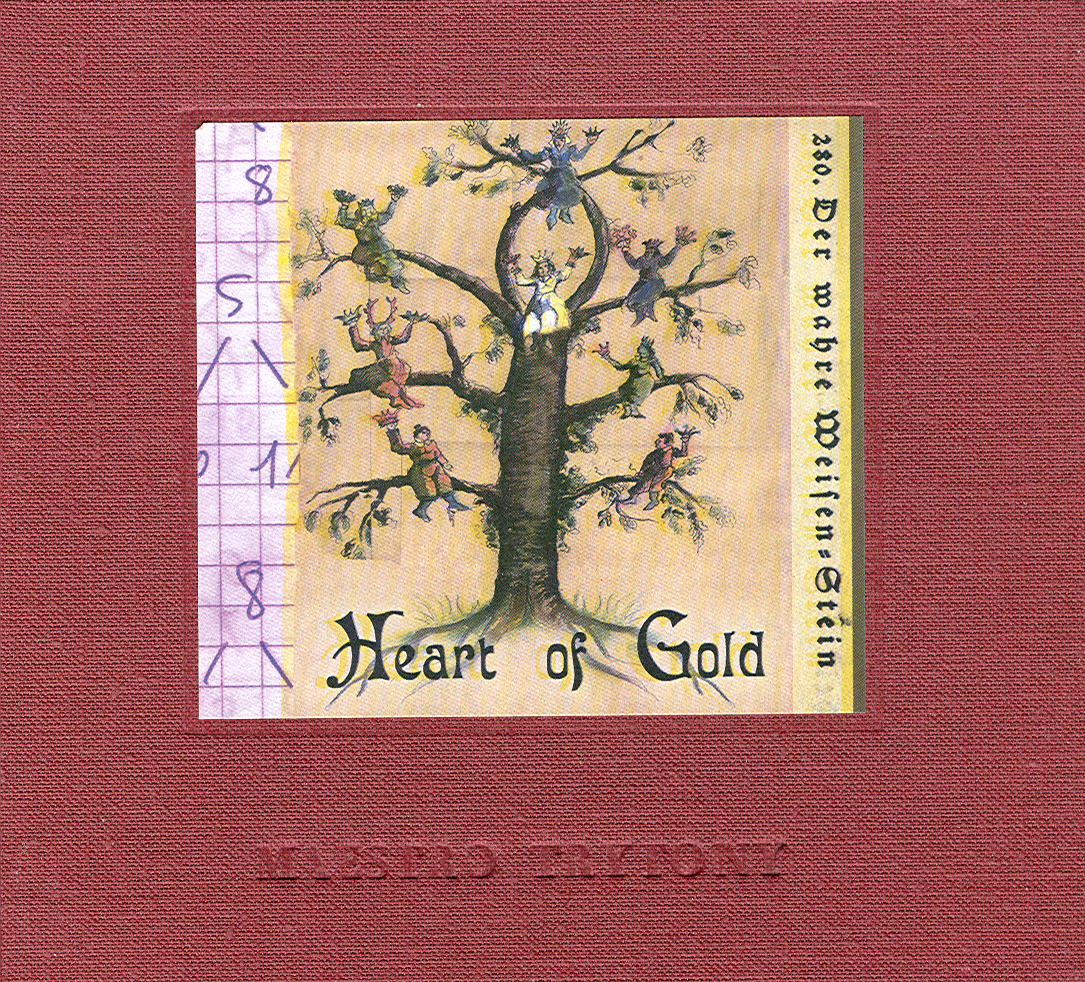
MAESTRO TRYTONY: “Heart of Gold” ****

Recorded 2004


Maestro Trytony are a Polish band led by Tomasz Gwicinski (guitar) and Tomasz Pawlicki (flute, keyboards).  The musicians grew up on mainstream rock music, but were subsequently exposed to the world of 20th century’s classic and jazz.  Indeed, the guitarist was considered one of the purveyors of the very local, neo-jazz phenomenon labeled as “yass” in the 1990s. 


Initially, the band appeared stylistically hesitant and some clumsiness accompanied their forays into over-generous orchestrations.  The initial ideas were highly engaging, but their eventual development suffered in longer compositions.  Fortunately, in their most recent incarnation they seem to have developed timbral sagacity, generating an undogmatic yet coherent idiom.  Where else could you find seeping interplay of baroque spinet, celestial flute and sharply edged jazz guitar?  On this hitherto unclaimed territory Maestro Trytony offer a refreshing dose of stylistic fence-sitting.


Q.R.G.

Pristine sound of conjectural spinet sets off, berthed by drum brushwork and cohesive bass figure.  The pre-classic keyboard drops lazy, dilatory notes like anonymous pearls.  Highly adaptive flute legato ushers us into splendid palaces whose gilded stucco should still remember Jean-Philippe Rameau’s premières.  Malgorzata Skotnicka’s spinet harmonics is endowed with quartz-like gloss and spangle-like utility.  Her part is too indeterminate to be classified as magisterial basso continuo.


Van Worden in Sierra Morena

An exercise in sequentially rewritten time signatures, the piece begins with a tone setting guitar and cinematic answer from emblematic flute and fuzz guitar.  A rapid progression of sub-thematic sections follows.  First comes a taut, jazzy run for acoustic bass, wire brush and a constantly busy flute.  This leads into a cul-de-sac, from which Abercrombie-style acoustic guitar fills spaces with ambiguous contours.  As if separated by a large, impervious screen, flute and electric guitar ascend, pairwise.  Thereupon, the two leaders adopt complementary roles.  Tomasz Gwicinski will entangle his chords in David Torn’s categorical manner.  Tomasz Pawlicki will crown the cadence.


Jocasta

The snail-like trail is first blazed by the acoustic guitar serving here as a cue for the fully rounded flute in the main melodic role.  Rafal Gorzycki’s drums splash briefly, failing to deliver on the promise.  The flute advances by leaps and starts, like a shy wallflower, only to recoil in its own introspection.  There are more harmonic opportunities for a portamento liberation.  The flute will digress, but stay trapped in its own image.  Finally, the stately spinet shows up, fuelled by a competent jazzy section of drums and bass (Patryk Weclawek).  Following a fourthfold phrase from the flute, the drummer taps into his repertory of multiplicative flailing.  Electric guitar bursts into spacious, but disciplined solo, audibly raising the tension.  In sharp contrast with the spinet’s graceful candelabra, Gwicinski’s topological exploration leaves behind ashy radio static.  It is as if the venerable keyboard instrument strayed into a damp gutter echoing with calls for help from a quashing guitar.  The pendular effect is further stressed by crashing cymbals.


Snowboarding Alechemysta

This piece flows like a flute hustle in search of speed control.  Pawlicki’s flutterings and tonguings excel particularly in high register.  But it’s only a matter of time before the galloping, jazzy bass/drum section bootstraps the electric guitar.  Against superb bass knotwork, the parabolic guitar hacks, arpeggiates and alternates between vibratos and pull-offs.  The impressive fluency that Gwicinski exhibits here is akin to Nels Cline’s approach.  Then the flute theme returns, menacingly piercing, yet fully flexible. 


Heart of Gold

The title track is a slow-evolving affair for flute and acoustic bass.  Mellow, descending line is oddly stuck in the Technicolor era of ethically dichotomous thrillers.  The phrasing, the tempos and the production make this a docile, relaxing moment.  The overprotective guitar’s noodling perilously approaches Metheny’s early style. 


Tax Collector

Prepared piano punctures an unusually tuned acoustic guitar, resurrecting the ghosts of Davey Williams’s groundbreaking inventions a quarter of century before.  Still, Maestro Trytony remain more potent rhythmically.  The dispersal of isolationist chords from the mistreated guitar and the injured piano appears more stochastic than combinatorial. 


Magic Tiara Part I

Magic Tiara Part II (Cherub. Wand.)

The two tracks are strung together and, at combined 14 minutes, dominate the record.  After an accessible flute intro, spinet tremolos lead us directly into a pseudo-Jamaican electric bass ostinato, bundled by a very modern-sounding percussion.  The beach guitar and melodious, but static flute are poles apart from the rather gymnastic, aerial rhythm.  A less diffuse, planar jazz guitar eventually soars, falling shy of replicating Rypadalian Nordic vistas.  A robotic countdown non-sequitur.  Outside, a discrete gamelan revels in sequined figure (Martin Franken).  Up front, the acoustic guitar stammers and stutters.  The flute is still there, but in a fairly neutral, refractive role.  Short violin scraps are almost inaudible (Lukasz Gorewicz).  By now, “Magic Tiara” could be totally free form, were it not for the bass that has kept the band in line all along.  Mechanical, unemotional female voice recites a text in English and the signals slowly dissipate. 


Nanotechnology

Dotted rhythms, short rolls, cascades, crosses and chokes vibrate from Jacek Majewski’s tenseless percussion.  His crystalline effects formulate a comfortable context for an ascending guitar crescendo.  The ensuing guitar improvisation unfolds with panache – voluble pitch control and heterodox speed control intersect in perfect timing as Gorzycki unleashes a veritable tornado on his drums.  The initial crescendo recurs, this time distracted by inroads into prepared piano’s intestines.  There is a welcome selectivity in the chosen variables.  While some strings are locked in by felt and strings, other keys remain tonal.  The equiprobable distribution of outcomes – some regular some jangly – is gradually decoded against the fast moving rhythm section.


Epilogue

More acoustic explorations for prepared piano, with a smoothing flute and a tentative guitar stuck in a groove. 


***


MAESTRO TRYTONY: “Enoptronia” (1996)

MAESTRO TRYTONY: “Heart of Gold” (2004)


European avant-garde jazz legend Andrzej Przybielski guests on the first CD.  The second CD is, however, superior.


Gwicinski had previously appeared in a formation Trytony, but I have not heard any of their recordings. 


Published in: on July 14, 2008 at 8:48 pm  Leave a Comment  
Tags: , ,

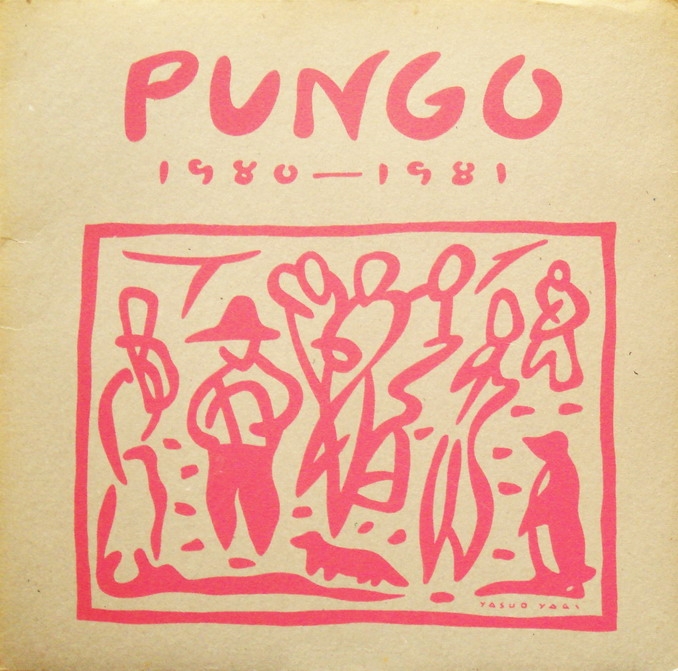
PUNGO: “1980-81” ****

Recorded 1980-81


Nobody remembers Pungo.  Tolerance?  Certainly.  Nord?  Yes.  Tenno?  Yes.  Inryofuen?  Maybe.  But Pungo?   No. 


Rewind.  Tokyo 1980-81.  The long-forgotten era of Prime Minister Suzuki, the Pope’s visit to Japan, Kurosawa’s “Kagemusha” and Chiyonofuji’s nascent dominance in sumo.  This was still a pre-bubble economy, fast diversifying after the second oil shock. 


Frequent attraction at Shinjuku’s ABC Hall, Pungo were essentially an idea of Yuriko Mukôjima (then Yuriko Kamba) and her friends, with Masami Shinoda among them.  Unshackled by requirements of musical virtuosity and critical of the stubbornly conservative Japanese society, they easily co-opted like minded amateurs.  Musically this implied the creation of austere, anthemic amalgams delivered in an egalitarian, colloquial fashion, amusingly covered up by genuine counter-culture convictions.  The predilection for makeshift pathos of revolutionary hymns corresponded, belatedly, to European left-wing sensibilities, as evinced by Stormy Six or Sogennantes Linksradikales Blasorchester.  But their musical idealism was informed by anti-aesthetics of post-punk. 


Akihiro Ishiwatari and Pungo’s engineer Ken’ichi Takeda went on to launch an even more straightforwardly leftist A-Musik.  They invited Shinoda.  Pungo’s subversive spirit lived a little longer in the poorly documented supergroup Fake which co-opted the likes of Tenko, Chie Mukai and Keiji Haino.  Sadly, Yuriko Mukôjima’s musical traces after 1981 were sporadic at best (Che Shizu, Lars Hollmer).  The late Masami Shinoda continued on his folk-jazz and anti-jazz pathway.  His art was to Tokyo what Curlew were to New York and Goebbels-Harth to Frankfurt.  


Rakutsu

After a curtain-raising sleigh bells jingle, accordion and bass intone a triste anthem.  The melody emerges slowly like revolutionaries from their conspiratorial gathering.  Painstakingly, Takashi Satô unearths his tympani meter.  Masami Shinoda’s weathered, proletarian alto saxophone carries the burden of a somber, urban ballad.  Yukio Satô’s ischaemic electric guitar fuzzes its way out of muck with adhesive anonymity. 


Teema

In one of collective hallmarks, Pungo launches into kabuki-like melismas ingeniously followed by galloping drumstick work.  Saxophone and guitar skronk jump in, setting the stage for Yuriko Kamba’s excoriating exclamations.  Two female dancers apparently participated in this live show.  It could be a French passepied, dependent on guitar and saxophone in latter-day Mahjun style.  But the parenthesis does not last and the band quickly reverts to the very Shintoist ascetism of howl’n’drum.  After a short silence, unconventional kabuki-like barking snaps at a cheaply romantic ballroom acoustic piano (Yuriko).  The final belongs to the shaggy, contrarian guitar.


Mikai no tango

Yuriko Kamba’s singing adjusts to Meguo Hisashita’s tangoed drumming.  The effort founders, torpefied by sudden hardcore blitz.  Yuriko yells the text against a raucous band led by Shinoda.  When the tango section returns, it does so in splashy, sloppy guitar chords.  Shinoda’s aylerian alto improvises lacrimoso over the choppy dance from Richueala’s shores.  Jirô Imai’s bass and Yuriko’s acoustic piano trudge wearily forward, but not for long. 


Shido

Rather than “playing”, Yuriko drums piano keys in a rashly muted mode reminiscent of early Reportaz (NB, the recording is of equally poor sound quality).  The performance is dramatic, barren and lackluster.  Imai’s bass landslide selectively stresses the beat.  After several austere repetitions, Shinoda intones the melody, but is quickly contested by the piano.  A rather disjointed percussion duo of Akihiro Ishiwatari and Takashi Satô scuttles around with amateurish, chronically offbeat drumming.  The racket keeps Shinoda’s lead from becoming too fluent and jazzy, but his hoarse manner continues to weave in the background, flanked by Yuriko’s irate shouting.  Satô’s minimal, truncated guitar shales evoke the Contortionists’ Jody Harris from around the same time. 


Yôdodo

The now familiar kabuki howling is on this track exclusively female and less audacious than previously.  When tribal drumming and bass fall into the groove, Shinoda improvises freely.  The demoniac wailing vaticinates Kwaidan imagery, unaffected by unsophisticated bass ostinato and rather basic four-handed drumming.  This is programmatically incompetent naïvism at its very best.


Ikenai

This memorable musical o-bento opens with a funky bass line and rotoreflective cymbal.  The chorus will swing from branches, aping an echoing, loony line: “ouah-ouah-ouah”.  A reggae-like guitar and a Pogues-type accordion give this bolero a very passé complexion.  As usual, the saxophone is more agile than the rest of the skittery band.  Yukiko keeps admonishing that we must not (“Ikenai”).  An unexpected countdown – “one-two-three-four” – and a counterblast of saxophone, guitar and violin rises from this ash heap like a step pyramid.  The band quickly returns to the funky groove, with the innocuously half-baked “ouha-ouah-ouah” and piano tremolos.  But the countdown returns – and so does the tidal wall.  The “reggae” guitar exits the scale and nothing appears in place anymore.  The alternation between the “song” and the Sun Ra-like cacophonous ziggurats in increasingly rash and unpredictable.  With each iteration, the band further purifies its exercise of deconstruction. 


Oiji

This is Pungo pared down to the co-leaders.  Yuriko’s accordion is tuning in slowly, abandoned in the environment of daily crackle, chores and voices.  Then, two saxophones and accordion deliver a harsh fanfare, through which Yuriko’s girly voice barely penetrates.  This track was recorded live in Kyoto and Shinoda appears to be playing on two saxophones at the same time, Roland Kirk-way.   An ocean of accordion harmonics waves gently, buoying the girly vocal.  Until Shinoda’s squeal drowns out everything else. 


Shinteema

After this duet, we have 14 taiko players rattling in this ingeniously entitled “New Theme”.  We can detect discrete shamisen, but before the jumpy “new” theme becomes just another Okinawa song, a megaton wind orchestra swamps it – covering a range from piccolo to tuba.  The guzzling big band emboldens the large chorus to sloganeer in the good old tradition etched in by the previous generation (early Tokyo Kid Brothers).  When the wind instruments wilter, solo chanting and piano will dominate for a moment.  The typhoon of taiko drumming and the crowded chorus wander on with their festive cheer about a traditional festival, tongue in cheek.  Pungo assembled here an incredible array of talent for mere cameo appearances – several bass players, dancers and violinists, including Chihiro Saito from avant-prog anti-melodists Lacrymosa.  This certainly was not the unique occasion.  We know that Phew also sang live with expanded Pungo.


Habanera

More of Iradier than Bizet, this is a farewell dance for saxophone and drum in slow, inevitable decay. 


***


PUNGO: “1981-82” (1981-82)


A-Musik remains the closest in the spirit to Pungo.  Shinoda’s later career blazed the trails of philosophical folk-jazz, but never lost its porous, unsettling quality.  Pidgin Combo were an international effort with Tom Cora.


A MUSIK: “E ku iroju” (1983)

Takuya NISHIMURA – Masami SHINODA: “Duo” (1986)

PIDGIN COMBO: “Long Vacation” (1988-89)

COMPOSTELA: “Compostela” (1990)

COMPOSTELA: “Wadachi” (1991-92)


For Shinoda completists, his scraggy, prismatic alto can also be found on. 


Kumiko SUYAMA: “Yume no hajimari” (1986)

CHE SHIZU: “Nazareth Live shû 1” (1983-1992)

MAHER SHALAL HASH BAZ: “From a Summer to Another Summer” (1985, 1989)

CASSIBER: “Live in Tokyo” (1992)


Yoshihide Otomo was Compostela’s fan.  His Ground Zero also sampled Shinoda’s alto saxophone with Cassiber on the unforgettable classic “Kakumei Kyôgeki”:


GROUND ZERO: “Kakumei kyôgeki” (1995-96)

Published in: on July 12, 2008 at 9:10 am  Leave a Comment  
Tags: , , ,

ARCHIMEDES BADKAR: “II” *****

Recorded 1974-76


Archimedes Badkar were a sizable conglomerate of highly talented Swedish musicians who enjoyed straddling the uncertain ground between European folk traditions, unjazzy improvisation and exotic panethnicity.  Although on vinyl few of their compositions extended 10 minutes, the free-flowing form of these pieces indicates that their musical adventures must have been more lengthy affairs.  


The band’s debut was recorded in a movable line-up of Per Tjernberg (keyboards), Peter Rönnberg (guitar), Matts Hellqvist (guitar and bass), Christer Bjernelind (bass), Kjell Andersson (drums), Tommy Adolfsson (trumpet), Jörgen Adolfsson (saxophone) and Pysen Eriksson (percussion).  Multi-instrumentalist Ingvar Karkoff later replaced Rönnberg, but only appeared on the second LP.  By the time Archimedes Badkar recorded its third LP, Bengt Berger and Peter Ragnarsson took responsibility for the increasingly complex polyrhythmic exoticism. 


Clearly, Archimedes Badkar fully digested the seeds planted in Sweden by Don Cherry in the early 1970s.  Despite the various influences – Balkan, Indian, or West African – the band’s unquestionable musical literacy always allowed them to maintain a sense of balance.  It remains a fresh and engaging experience over three decades later.


Förtryckets sista timme

The double LP begins with a riddle.  Ottoman-sounding lute will weave its gentle threads throughout this first piece, but we are not sure who the player is.  The original LP mentions Anita Livstrand as the officiating tambura player, but some later tracks convince us that she probably handles the droning Indian tambura, not the long-necked Iranian tambura or Yugoslav namesake derived from Turkish saz…  Whoever the virtuoso of this oud-sounding lute is does a heck of a job.  The drone ration is provided by Jörgen Alofsson on static viola.  Pysen Eriksson adds his hand drums with divagations transplanted from raga scales.  As discrete accompaniment is being procreated from an intercourse of tambourine and electric bass, the “oud” lays out uplifting, floating, quasi-improvised beadwork.  Then the viola drone and rhythmic tiles whittle down, allowing the “oud” to handle the spotlight with C-tunings.  The track picks up pace and sidewinds with Christer Bjernelind’s locked-in bass becoming more prominent.  This sublime example of damascened ethno-jazz-folk was written by Christér Bothen, one of Don Cherry’s disciples.


Efter regnet

Peter Ragnarsson on digressive tabla and Christer Bjernelind on glimmering, breezy mandola anchor the rest of the band.  Somewhat laconic and parsimonious, the viola lurks behind, overshadowed by faint, subharmonic vocalizations.  Tangential (Indian) tambura plays a very marginal role here – only occasionally pitching in a short phrase.  Throughout the piece, the sensorial and subtle timbral organization evokes the Italian band Aktuala which featured a very young Trilok Gurtu around the same time.  When violin and mandola finally intone a springtime tune, things get progressively denser, with superimposition of patterns moving in various directions. 


Vattenfall

This sequel, recorded several months later, is a much faster acoustic guitar theme that evolves into a pleasant theme for multiple lutes and bass. 


Rebecca

A sprightly folk song is played on clarinet solo (Kjell Andersson) and mandolin.  After the competent intro, an unwieldy recorder and triangle add some enhancing accents. 


Jorden

Sleigh bells invite us to a Nordic ride.  Polarized drone emerges from electric guitars, painting static aquarelle circles.  The bells and coppery jangle occasionally bulge from inside the drone, some generated by faster handiwork and some by dissolute pick scrapes.  At the end, only sleigh bells bid farewell.


”Charmante Yérévan” en lät från Armenien

This traditional Armenian song was arranged by Per Tjernberg and Kjell Westling of Arbete och Fritid.  Westling, who had recently recorded with Bengt Berger in Spjärnsvallet, appears here on flutes, disambiguating the melodic lines.  The remaining instruments – electric piano, mandola, acoustic piano, drum and bass – conform to the Sweden’s vintage ‘world music’ style of that era and comparisons with Arbete och Fritid cannot be easily avoided.  When Per Tjernberg’s clavinet rolls into the cusps of twists and hooks, Samla Mammas Manna’s tongue-in-cheek playfulness comes to mind as well.  There are even more references when the duo of Tommy & Jörgen Adolfsson on trumpet and saxophone takes over.  This album was recorded barely four months after Tommy Adolfsson participated in the recording of Berits Halsband’s eponymous LP.  From all this personal distraction emerges an intoxicating classic of European folk.  The candid cascade is finally cut off by the bass and electric piano.


Afreaka II

This track prepares us for the abstract sound that Jörgen Adolfsson would soon develop on Iskra’s monumental avant-garde jazz recordings, with bells, chimes, free form acoustic guitar and excursions into piano morphology.  Drumsticks hurt themselves against a metal frame, while less bruised participants embark on a timbral research of mandola and mandolin (Jörgen Adolfsson).  After a short silence, sparse scraps of isolated notes contend with hollow bamboo clacking and half-mute gongs.  Unexpectedly, acoustic guitar quilts a West African-sounding picking line, quickly falling into a groove and gaining support from an army of shakers, rattles and vibraslap.  The resulting, obsessive drumming on woodblocks (Bengt Berger) reminds me of a raucous, percussive trip on a Senegalese ferry not long ago…  Here, Archimedes Badkar engages with passion in a tribal jam, fading out all too soon.


Radio Tibet

The first question is – “is it a tuba, or is it a Tibetan trumpet”?  Recalling my own visits to Tibetan monasteries, this sounds rather quiet and unobtrusive by comparison.  Crash cymbals resonate, with long sustain before we can identify the horn sound to be (most probably) Bb bass trumpet.  It is endowed with a round, full sound – way more responsive than the long Tibetan trumpets and more easily likened to a trombone.  When Ingvar Karkoff’s electric guitar tinkers gently with reverb, he is ends up being entirely swallowed by the resulting echo.  Meanwhile, crotals shimmer fluently, ebbing and flowing in and out of focus.  The layers accumulate, impasto style – Pysen Eriksson pitches in on palo de agua and some metallic tubes send out graceful overtones.  By now Karkoff’s guitar turns into a Günter Schickert-like echo guitar, albeit sans its rock rhythm.


Tvä världar

Surprisingly, this is formed around additive rhythms on acoustic piano, reminiscent of Steve Reich’s easily recognizable style, and complete with invading horn waves.  Only mandolin’s barely tangible clipping adds a differing shade.  We have sitar and chimes with splashes of liquefied color; and a soprano saxophone sketching a melancholic line.  In a bow to systemic syncretism, the violin chips in in a more Paul Zukofsky-like manner (more active, squeezing many more notes per measure).  These claddings are carried on loops of various lengths and begin to diverge just when a straight-ahead rock drum intervenes.  Once, twice.  Then nothing.  Thrice.  Is this going to be another rock version of classical American minimalism?  L’infonie’s “Vol.33” (1970) comes to mind – the very first of many rock adaptations of Terry Riley’s most famous composition.  But Archimedes Badkar is not launching into rewriting the rules of the genre.  The band will incorporate a salient trumpet, a feeble piano and the Indian tambura forever condemned to its background role. 


Jugoslavisk dansk

This is a merry “Yugoslav” dance scored for saxophone, tambourine and solo clarinet.  With some additional ingredients from reticent acoustic piano and bass, the band spins endlessly – there so much buoyancy with just a couple measures!  We would have to wait for Matt Darriau’s Paradox Trio to get a real mouthful of these Balkan hooks. 


Indisk folkmelodi och ett tema av Ingvar

Indian tambura drone translates for us the Swedish title (Indian folk melody).  Very un-Indian recorders replace subcontinental shawms and clavinet substitutes for…  well only Ingvar Karkoff would know for what.  The rhythmic framework is maintained by Moroccan bandir and tambourine.  In a fluid, conversational development, Per Tjernberg syncopates on his acoustic piano within the limits of the upbeat theme.  Archimedes Badkar perfected a thematic evolution in which melodious prayers are born from exotic percussive foam, something that this piece does very well.


Tvä hundra stolta är

The closing track is a very distinct affair, opening with non-realist cello bowing.  All the other contributions will remain contingent on this – electronic organ overtones, violin squeals and mourning.  It is a highly intense piece of improvisation zooming on a rather unusual instrumental combination.  The violin and cello will seek some classical cues, but to no avail; the exploration will remain free form.  Kjell Anderson scrapes and grates his drums but dares not to beat them.  The plaintive violin brings back the ghost of Dave Cross. 


***


Archimedes Badkar climaxed around the time of “II”, but their first LP is equally recommended. 


ARCHIMEDES BADKAR: “Badrock för barn i alla åldrar” (1974)

ARCHIMEDES BADKAR: “II” 2LP (1974-76)

ARCHIMEDES BADKAR: “Tre” (1977)

ARCHIMEDES BADKAR: “Bado kidogo” (1979)


For those who enjoy the ethno-jazz side of Archimedes Badkar, several early efforts by Bengt Berger are also worth tracking down:


RENA RAMA: “Rena Rama” (1973)

SPJÄRNSVALLET: “Spjärnsvallet” (1975)

Bengt BERGER: “Bitter Funeral Beer” (1981)

BITTER FUNERAL BEER BAND: “Live in Nürnberg“ (1984)


Jörgen Adolfsson’s Iskra developed a very different, free form style that at first approach may seem sterile.  These records do, however, reward listeners’ commitment.  You do not have to be the lover of European free jazz to enjoy them.


ISKRA: “Jazz i Sverige 1975“ 2LP (1975)

ISKRA: “Allemansrätt“ (1976-77)

ISKRA: “Besvärjelser“ (1979)


As mentioned before, Tommy Adolfsson starred on Berits Halsband’s eponymous LP.  The band’s music falls more into avant-fusion category.  It is highly rewarding and has aged very well.


BERITS HALSBAND: “Berits Halsband” (1975)


Archimedes Badkar’s extended line-up overlaps partly with the ever eclectic Arbete och Fritid and with Don Cherry’s Swedish formations.  Both will qualify for separate treatment.